Yep! It’s here once again, everyone. The Melbourne International Film Festival, one of Australia’s most beloved film festivals is back to deliver many acclaimed films, shorts and other film related goodies from all over the world for 18 days. Having covered and attended MIFF nearly every year since I first moved to Melbourne back in 2012, I’m always excited when this time of year comes around. Over 250 films, shorts, documentaries etc. are planned to screen at MIFF this year (some even making their world premieres), so there’s definitely a lot to choose from. While there are some high-profile films that are playing at the festival, I’m going to be mostly focusing on films that either don’t have a release date as of yet or they won’t be released until a much later date (whether that will be later this year or sometime in 2027). After going through the program, I’ve narrowed down my list to 27 films that I plan on seeing at MIFF. Even though its a few down compared to last year but due to my schedule with my day job being a lot busier at the moment, I won’t be able to see as much. Honestly, after suffering a bit of festival fatigue pretty quickly these past years, cutting back wasn’t too much of a problem for me. Now you’re probably wondering, which 27 films are they? Well, without further ado. Here’s my complete rundown of everything that I’ll be seeing at MIFF 2026…
ALL OF A SUDDEN
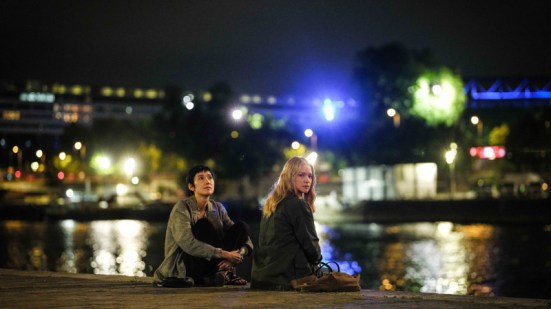
DIRECTOR: Ryūsuke Hamaguchi
PLOT: Virginie Efira and Tao Okamoto shared Best Actress Awards at Cannes for their sterling work in the latest long-form opus from master filmmaker Ryusuke Hamaguchi. Marie-Lou (Virginie Efira, Parallel Tales, MIFF 2026) runs an aged-care facility on the outskirts of Paris. She’s devoted to her job and her patients, and firmly believes that the elderly should be treated with dignity. It’s tough work, and, like so many of her employees, she’s dealing with burnout. But her spirit is rekindled when she meets Japanese playwright Mari (Tao Okamoto), who’s staging a theatre piece about the history of mental asylums in Italy. As they plunge headlong into all-night conversations about mortality, philosophy and the degradations of capitalism, Mari and Marie-Lou’s new friendship will change both of their lives. The films of Ryusuke Hamaguchi – often in-depth explorations of human connection fostered by theatre and workshops – operate at a distinctive register and rhythm, and his first film made outside of Japan is no exception. In All of a Sudden, Hamaguchi interrogates the state of elder care, using it to reflect the ways contemporary societies function. His mastery meets its match in leads Efira and Okamoto, who shared the Best Actress award at Cannes for remarkable performances that shift between French and Japanese and work through a complex array of emotions.
AMERICAN DOCTOR
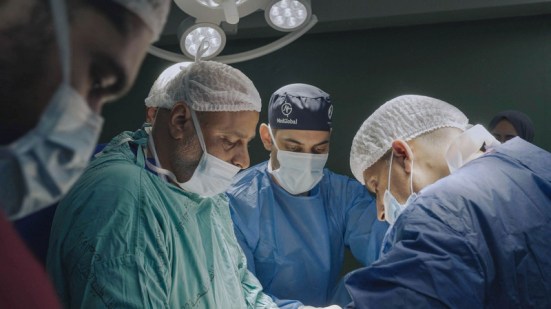
DIRECTOR: Poh Si Teng
PLOT: An unapologetic cry for humanity that reveals the on-the-ground reality of the genocide in Gaza and the experiences of the frontline medical volunteers who put their principles into practice. Across late 2024 and early 2025, three doctors from the United States – Jewish orthopaedic surgeon Mark Perlmutter, Zoroastrian trauma surgeon Feroze Sidhwa and Palestinian emergency doctor Thaer Ahmad – worked in hospitals in the Gaza Strip trying to save some of the many lives being destroyed by the US-backed Israeli Defence Forces. Back home in North America, they attempt to reconcile these experiences with their day-to-day lives, as they also strive to raise awareness in the face of a world that would much prefer to look away. The feature-length directorial debut of journalist and producer Poh Si Teng, American Doctor provides an unflinching exposé of the consequences of war as experienced by physicians: the suffering they encountered; the personal danger; the physical and emotional toll. In this challenging but compelling and essential documentary, the three men’s vastly different personalities bring into sharp focus the inequalities of privilege even among professional equals, reinforcing the urgency of their shared call for a more just world.
THE BELOVED
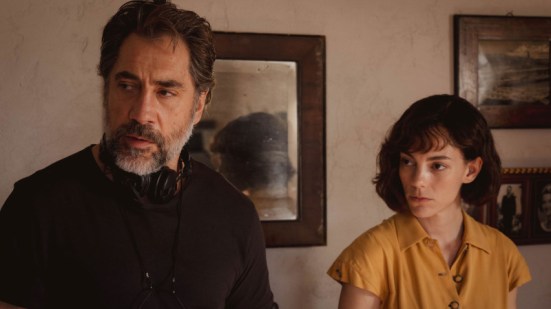
DIRECTOR: Rodrigo Sorogoyen
PLOT: Javier Bardem enthrals as a legendary director with ambiguous intentions who casts his estranged daughter in an upcoming film. Esteban, a widely laurelled enfant terrible of global cinema, has returned to Spain to shoot a period film entitled Desert. He wants his daughter Emilia – who’s had roles on TV, and whom he hasn’t seen in 30 years – to play the lead. Despite having baggage around his alcoholism and aggression, she takes the part. Once together, the pair feel the heat not just of the production’s Canary Islands setting but also of the tensions that simmer between them. The plot line of the latest feature from Goya Award–winning director Rodrigo Sorogoyen (The Beasts; Mother, MIFF 2018) may evoke Sentimental Value, but it trades in Joachim Trier’s optimistic take on filial reconciliation for a far more scorching account of familial messiness. Alongside questions of nepotism, ulterior motives and creative exploitation, The Beloved makes ingenious use of myriad film stocks – from sombre black-and-white to shaky, vibrant handheld; from 16mm to 35mm to digital – to convey differing mental states, circumstances and slants on the past. Matching Javier Bardem’s career-best performance as a morally murky agent of patriarchal power, Victoria Luengo (Bitter Christmas, MIFF 2026) portrays Emilia’s guardedness and resentment with sophisticated grace.
THE BEST SUMMER
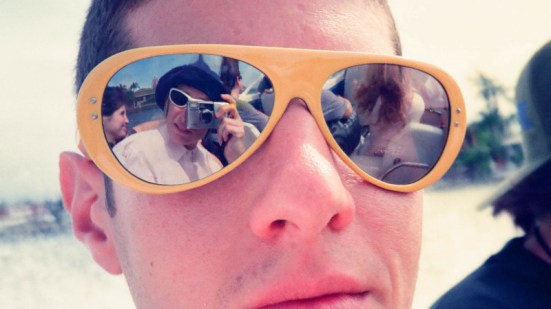
DIRECTOR: Tamra Davis
PLOT: Beastie Boys, Sonic Youth, Foo Fighters, Bikini Kill, Pavement and more, all at one fateful Aussie music festival. Get in line – we’re heading to 1995. December 1995: riding high on her hit comedy Billy Madison and numerous celebrated music videos, Tamra Davis (Jean-Michel Basquiat: The Radiant Child, MIFF 2010) brought her Sony Hi8 camcorder to Australia on tour with her new husband, Mike D of the Beastie Boys. At Summersault, an upstart festival hoping to outshine the Big Day Out, Davis recorded electric live sets from the Beasties and pals Pavement, Sonic Youth, Dave Grohl’s new band Foo Fighters and Kim Deal’s Breeders-hiatus project The Amps. And as Bikini Kill’s Kathleen Hanna playfully interviewed other musos backstage, Davis unknowingly documented the riot grrrl icon falling for future husband Adam “Ad-Rock” Horovitz. Thirty years later, Davis found a shoebox of old 8mm videotapes while evacuating her home during the Los Angeles Palisades wildfire. This precious time capsule – a last hurrah of scrappy underground camaraderie before landmark albums and arena superstardom – formed the basis for this wistful feature-length window into another era. Summersault didn’t last, but its young promoter Steve Pavlovic went on to found cult label Modular Recordings, decisively shaping Australian indie music. “It was such a different time,” Davis told the crowd at the film’s 2026 Sundance premiere – and this shaggy hangout travelogue will take you right back there.
BITTER CHRISTMAS

DIRECTOR: Pedro Almodóvar
PLOT: Pedro Almodóvar returns with this witty, award-winning metafiction that satirises the vampiric nature of creativity. It’s 2004, and the wells of inspiration are drying up for movie director Elsa. Worse still, despite her firefighter/stripper boyfriend’s coddling, she’s as burdened by migraines as she is with her friends’ troubles. But all of this is merely a story; a creation of filmmaker Raúl, Elsa is the protagonist of the film that he’s struggling to complete in 2026, much to the dismay of his supportive partner, Santi. That spark suddenly returns when Raúl’s assistant Mónica takes leave to help a friend who has just lost a child, a tragedy that becomes a plot point in his own script. Perhaps this new inspiration will give Raúl insights into his own life and relationships; but how far is too far when an artist continually cribs from the experiences of others? Much like Pain and Glory (MIFF 2019), Pedro Almodóvar’s latest Competition headliner at Cannes – where it shared the Soundtrack Award – is an ingenious piece of self-portraiture that interrogates creativity and its impediments. The enthralling film-within-a-film explodes onto the screen with the director’s signature vivid colours and sumptuous settings, which are enhanced by the piquant soundtrack by long-time collaborator Alberto Iglesias. Leads Bárbara Lennie and Leonardo Sbaraglia are stellar as mirror images of each other and of Almodóvar himself, propelling an autofictional triumph that ponders art’s (mis)appropriation of life.
BOSS CAT
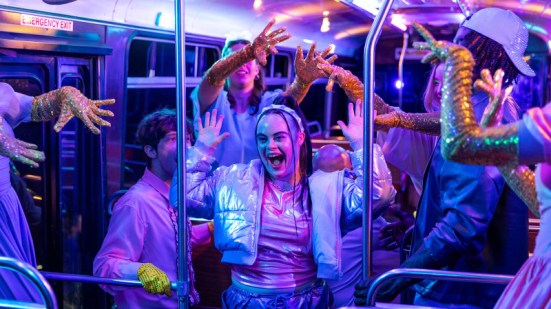
DIRECTOR: Genevieve Clay-Smith
PLOT: Desperate for independence, Sonja discovers the vibrant world of krump dancing, where she embraces expressiveness, challenges social judgement and finds her people. When her mother suddenly dies, Sonja (played by impressive newcomer Olivia Hargroder) is thrown into tumult. Dealing with early-twenties existential angst and a sense of responsibility for her teenage younger sister Emma (Julia Savage, Blaze, MIFF 2022), she has a lot on her plate. Suddenly under the care of her controlling grandma and – as a young woman living with Down syndrome – constantly faced with a society that judges what she’s capable of, Sonja is desperate to be herself and take charge of her own life. When a chance encounter with the charismatic Hakim (Elijah Williams, Home and Away) leads her to a krump class, Sonja discovers a life-changing outlet for expression. Since her Tropfest-winning 2009 short Be My Brother, filmmaker Genevieve Clay-Smith has long been an advocate for stronger onscreen representation of people of diverse backgrounds and identities; her 2018 short Inclusion Makes the World More Vibrant effectively distils her mission statement in its title. Filled with energy, enthusiasm, optimism and a gentle dose of provocation, Clay-Smith’s debut fiction feature is a moving, empowering, feel-good Aussie film.
COWARD
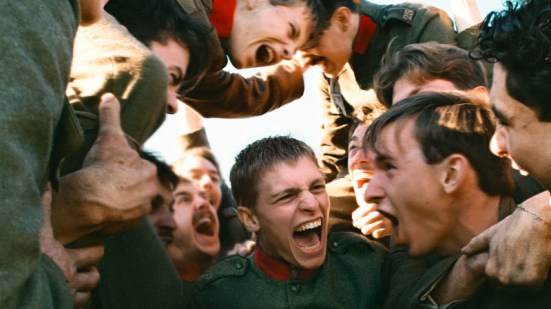
DIRECTOR: Lukas Dhont
PLOT: Lukas Dhont’s stirring latest film – which won its leads a pair of Best Actor prizes at Cannes – depicts a clandestine romance between two young men that blooms in the trenches of WWI. It’s 1916, and Pierre and Francis have been conscripted to fight on the Western Front. Nicknamed “Quiet Mouse”, the former is a handsome, brawny farmer who struggles to express himself; the latter, a tailor’s son, is flamboyant and creative. Francis is enlisted to direct a theatre troupe that will entertain the soldiers, a role that includes cross-dressing as the female lead. When Pierre is tasked with assisting the troupe, the pair’s opposing qualities draw them together – and collaboration evolves into something more. Following the Cannes Grand Prix–winning Close (MIFF 2022) and Queer Palm–awarded Girl (MIFF 2018), Lukas Dhont crafts another testament to LGBTQIA+ resistance amid repressive circumstances. But Dhont is less interested in an anachronistic ‘queering’ of history than in holding a mirror to the homosocial foundations of wartime camaraderie. While returning cinematographer Frank van den Eeden (Small Things Like These) doesn’t avoid the conflict’s horrors, his camera observes Emmanuel Macchia and Valentin Campagne (Species, MIFF 2026) with an intimacy recalling Beau Travail (MIFF 2000), their undeniable chemistry fuelling an emotive drama about forbidden love on the front lines.
THE DIARY OF A CHAMBERMAID
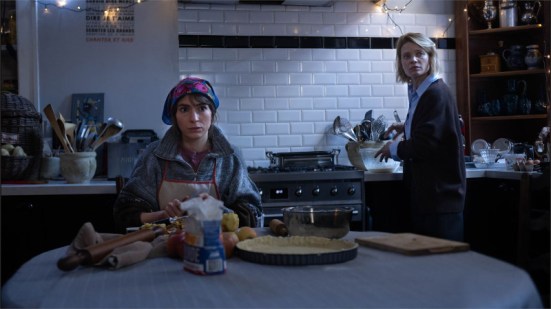
DIRECTOR: Radu Jude
PLOT: Romania’s premier provocateur returns, as razor-sharp as ever, with a finely wrought parable skewering the ‘good intentions’ of the bourgeoisie. Gianina is a live-in nanny for a wealthy family in Bordeaux. One of the many Romanians who go to France seeking better economic conditions, she keeps the extravagant home shipshape, cooks the family their favourite Thai meals and cares for their occasionally bratty young son. In the evenings, Gianina divides her time between rehearsals for a play – specifically, a bawdy, experimental adaptation of the titular 1900 Octave Mirbeau novel previously brought to screen by Jean Renoir and Luis Buñuel – and video-calling her daughter, who jealously pines for her back in their home village. Feted at Cannes, Radu Jude’s latest class satire operates in a realist, somewhat melancholic register closer to that of Kontinental ’25 (MIFF 2025) than to his anarchic Dracula. Anchored by excellent performances from Ana Dumitraşcu as Gianina and Mélanie Thierry and Vincent Macaigne (Suspended Time, MIFF 2024) as her employers – as well as Ilinca Manolache, the irrepressible star of Jude’s 2023 opus Do Not Expect Too Much From the End of the World – this left-of-field literary riff is both deeply compassionate and merciless in dramatising the sometimes absurd, often humiliating, plight of migrant workers.
GHOST IN THE CELL
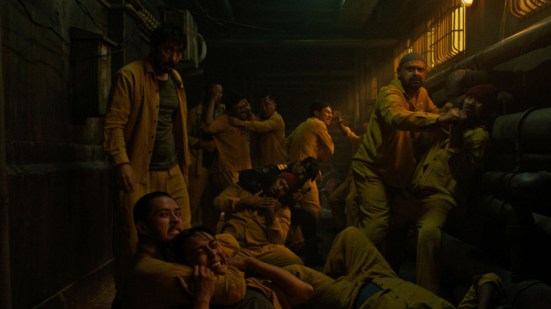
DIRECTOR: Joko Anwar
PLOT: When a vengeful ghost starts mutilating the inmates of one of Indonesia’s toughest prisons, the men must work together to stay alive in this socially conscious action-horror-comedy. The newest inmate to join cell block C of Labuan Angsana prison is Dimas, a weedy journalist doing time for the brutal murder of his editor. Suspiciously soon after Dimas’s arrival, prisoners start getting picked off one by one, their bodies found gruesomely maimed and arranged into macabre sculptures that would make Hannibal Lecter proud. The prisoners panic, pointing the finger at Dimas, but one clairvoyant inmate is adamant that there’s a sinister supernatural entity behind the killings. He warns the others that they’d better keep their auras clean through art, prayer and dance, lest they become the ghost’s next victim. The 12th feature by Indonesian genre master Joko Anwar (Satan’s Slaves), this action-packed horror-comedy has a lot on its mind. Smuggled in between the film’s visually imaginative gore and twisted sense of humour is an astute commentary on systemic inequality and corruption, using the prison setting and its ensemble of colourful characters as a microcosm of society at large – with a few dance battles thrown in for good measure.
JEBEDIAH: ARE WE OK?
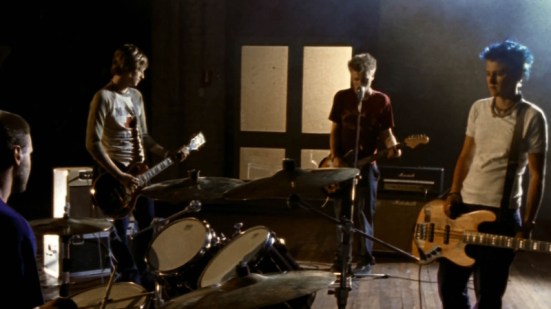
DIRECTOR: Arlo Dean Cook
PLOT: Take a 30-year journey with the beloved Australian alternative rock band, from humble beginnings to the harder aspects of growing up. Perth alt rockers Jebediah were a breed apart in the halcyon days of the late-90s and early-2000s Australian indie music scene. In stark contrast to the often volatile and soon-to-splinter groups they toured with, the easygoing quartet – lead singer Kevin Mitchell (aka Bob Evans), his drummer brother Brett, bassist Ness Thornton and lead guitarist Chris Daymond – stuck fast to one another. Commanding national attention on triple j and soon channelling the cred of multiple studio albums into their own record label, Jebediah seemed like quintessential industry survivors. But as the band entered its third decade, the freewheeling lifestyle of their youth had begun to cast a shadow. With recreation shifting to addiction and connections fraying, will these lifelong friends and creative partners find a way to keep the music alive? Built from a wealth of archival and home-movie footage ranging from the band’s humble high school beginnings through to the current day, as well as firsthand perspectives from local music icons such as Tim Rogers, Phil Jamieson and Janet English, Arlo Dean Cook’s MIFF Premiere Fund–supported documentary is a rocking roller-coaster ride and a candid cautionary tale about the price of fame.
JIM QUEEN
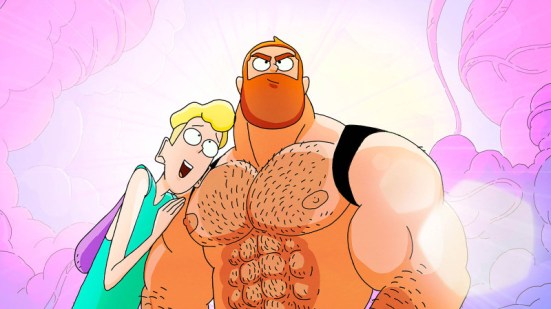
DIRECTOR: Nicolas Athane & Marco Nguyen
PLOT: Come for a gleefully filthy romp through Gay Paree as a buff influencer and his twink fight to cure a heinous virus that makes queer people straight! Jim Parfait is the top gay gymfluencer in Paris. When he’s not posting his daily workouts, he’s flaunting his gigantic rig at parties with his best pal Nina. She’s the first to spot that one of Jim’s 24 magnificent abs has vanished. Quelle horreur! Jim has heterosis: the dreaded virus that’s turning queer Parisians … straight. As Jim’s fickle followers abandon him for his brawny nemesis Pavel, he teams up with Lucien – closeted twink son of France’s villainous conservative health minister – on a hero’s cruise for a cure. In the city’s degenerate demimonde, they’ll encounter bears, techno-blasting leather puppies, Glamydia of the Sisters of Perpetual Indulgence and the militant ‘Gaystapo’ threatening Jim with reverse-conversion therapy. There’s serious commentary on the state of the modern world to be found in Nicolas Athane and Marco Nguyen’s outrageous Cannes-premiering satire. But be prepared nonetheless for a barrage of the world’s silliest, lewdest jokes, while the macaron-toned Rick and Morty-esque animation stuffs the frame with as much absurdity as the protein that Jim gorges on.
KIM NOVAK’S VERTIGO
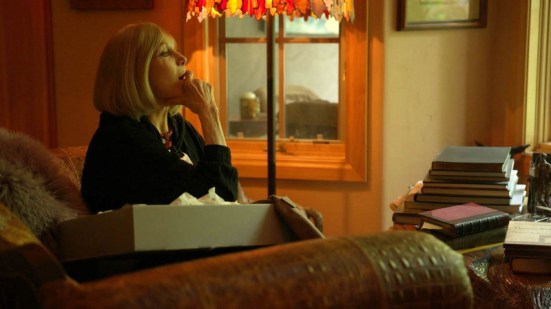
DIRECTOR: Alexandre O. Philippe
PLOT: In studio-era Hollywood, Kim Novak fought to craft her own identity. In this affectionate documentary portrait, she elegantly redefines her legacy. People have rarely given Kim Novak the credit she deserves. She has been dismissed as a generic 1950s studio blonde; her slippery performance in 1958 psychological thriller Vertigo (MIFF 1984) is too often attributed only to director Alfred Hitchcock’s genius; and her long, fiercely private retirement is treated as the wreckage of Hollywood misogyny. All the while, however, Novak has been her own auteur. She fought Columbia Pictures boss Harry Cohn to keep her own surname, and went on strike for better pay. Now 93, she recalls Vertigo as a satisfyingly metatextual collaboration, reframing her life’s dizzying, spiralling narratives as “a big, beautiful circle”. In the prolific Alexandre O. Philippe, Novak finds an avid, erudite listener. His documentaries on cinema craft are frequently valentines to individual films: The Texas Chainsaw Massacre (Chain Reactions, MIFF 2025), Alien (Memory – The Origins of Alien, MIFF 2019) and Psycho (78/52, MIFF 2017). Here, as in his William Shatner portrait You Can Call Me Bill (MIFF 2023), Philippe illuminates a complex person rather than worshipping a star. Kim Novak’s Vertigo celebrates an unforgettable movie through its subject’s refreshingly candid musings on the tensions between authenticity and mystique.
THE LEADER
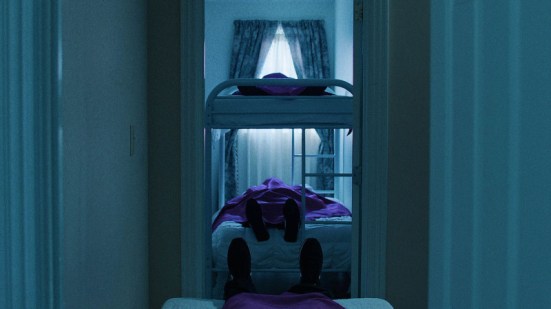
DIRECTOR: Michael Gallagher
PLOT: A remarkable Tim Blake Nelson and Vera Farmiga are out of this world as Heaven’s Gate co-founders Marshall Applewhite and Bonnie Lu Nettles. In 1972, Marshall Applewhite overdoses on a bottle of pills and ends up in hospital in the care of nurse Bonnie Lu Nettles, a spiritual seeker feeling empty in her personal life. Dubbing themselves “Do” and “Ti” as their sense of cosmic connection escalates into a Messianic bond, they manifest a doctrine that fuses biblical prophecy with new-age UFO utopianism and strict asexuality, drawing other broken souls into their orbit. Their goal: to leave their weak flesh behind and ascend to the stars. The reality of their Heaven’s Gate cult was grimmer: after Nettles died of cancer in 1985, Applewhite infamously staged a 1997 mass suicide together with 38 of his followers. Having grown up in San Diego, not far from the Heaven’s Gate compound, writer/director Michael Gallagher channels a lifelong fascination and a decade-plus of research into this darkly gripping true-crime drama. Its documentary-like authenticity frames two unnerving lead performances from Tim Blake Nelson and Vera Farmiga, while Jim Parsons and Simon Rex (Magic Farm, MIFF 2025) shine in support as loyal believers. Driving The Leader is the urgent question of why – and, in answer, the film becomes both a compelling psychological study and a chilling psychological horror.
MAD RUSH
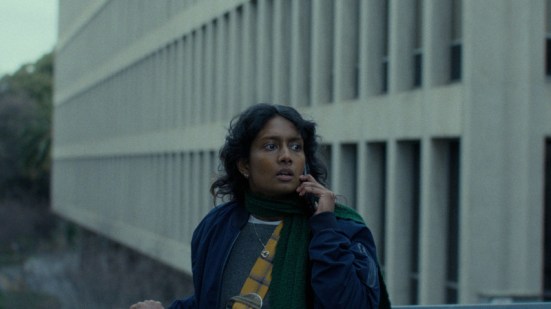
DIRECTOR: Maddelin McKenna
PLOT: A young woman gets caught in an elaborate phone scam which sends her on a twisted odyssey through the Melbourne CBD. Madisha’s morning couldn’t get any worse: a rootless Gen Z already struggling to find her purpose in life, she’s just learned that her housemate is ditching her and is still reeling from having lost her most recent job under cloudy circumstances. So when she gets a call advising her of fraudulent activity on her bank account and urgently requesting that she withdraw all of her money in cash, Madisha is sent on a panicked odyssey through the Melbourne CBD – a pursuit that leads her to ominous alleyways, busy street corners, an alcohol-soaked house party and, perhaps, the fledgling desire to take charge of her own life. Supported by the MIFF Premiere Fund, this visually striking debut feature film by Accelerator Lab alum Maddelin McKenna (Patterns of the Afternoon, MIFF 2022) is a nuanced, deeply relatable portrait of a spiky but vulnerable young woman caught in a web tightening around her. Anchored around a stunning lead performance from Senuri Chandrani (Of an Age, MIFF 2022) as the film’s Alice-like protagonist, Mad Rush turns our city into a gritty, disorienting urban Wonderland.
THE MAN I LOVE

DIRECTORS: Ira Sachs
PLOT: Rami Malek captivates as an HIV-positive man who combats mortality with moxie in Ira Sachs’s Cannes-competing ode to queerness and libertinism. New York, late 1980s. Having just left hospital, ebullient theatre artist Jimmy wants to take on life itself: partying with other figures from the West Village demimonde; preparing a spectacular oeuvre for the stage; being seen and loved in every way possible. He is loved, of course, despite his mercurial ego: by Dennis, his devoted partner, and by Brenda, his sister. But Jimmy’s HIV meds don’t guarantee survival; so, when a handsome young Brit moves into the building, Jimmy proceeds with abandon. Following Peter Hujar’s Day (MIFF 2025), Ira Sachs crafts another stirring time capsule of queer New York; The Man I Love also recalls his immediately previous work, Passages (MIFF 2023), in featuring a love triangle, but here the focus is less on erotic foibles than on the impetuousness of living on borrowed time. Working from a script from Sachs and his regular co-writer Mauricio Zacharias, and acting alongside a formidable Tom Sturridge, Rami Malek brilliantly incarnates Jimmy’s unapologetic audacity and the yearning fragility beneath his bravado. More than an AIDS drama, The Man I Love is a story of perseverance and performativity – about the shows we put on despite the obstacles of health and the heart.
MINOTAUR
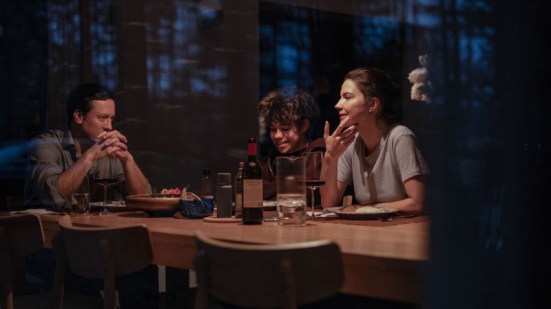
DIRECTOR: Andrey Zvyagintsev
PLOT: The winner of this year’s Grand Prix at Cannes, Andrey Zvyagintsev’s first film in almost a decade is an immaculate, sometimes darkly funny howl of rage at the corruption and moral entropy of Vladimir Putin’s war-enmeshed Russia. In the immediate wake of his nation’s invasion of Ukraine, wealthy company CEO Gleb is directed to provide cannon fodder for Russia’s war machine. As he is ‘volunteering’ men to be drafted from within his employee pool, he learns that his wife Galina is having an affair with a handsome young artist. This intersection of Gleb’s professional and private crises becomes a trigger point for a shocking showdown. After recovering from a near-fatal coma in 2021, dissident Russian director Andrey Zvyagintsev (Loveless, MIFF 2017) has returned to reinterpret Claude Chabrol’s 1969 classic The Unfaithful Wife as a staunchly contemporary study of masculinity, both personal and political. His life in exile in France has only sharpened his fury at the current state of his fatherland, which is directed with exquisite precision not just at Putin and his cronies but also at the everyday collaborators, deliberate or accidental, who proliferate in the shadow of war. Shot in Latvia, Minotaur is a merciless thriller for our present times, with a crisp and cunning eye for detail and a savage streak of wry humour – a pièce de résistance in more ways than one.
THE ONLY LIVING PICKPOCKET IN NEW YORK
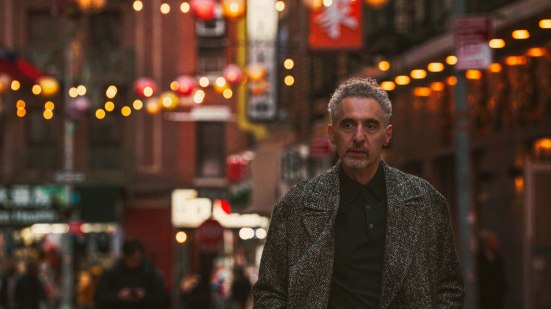
DIRECTOR: Noah Segan
PLOT: John Turturro stars as a pavement-pounding old-school thief who needs all his Big Apple savvy to save his wife – and his way of life – from a young crypto gangster. Harry is a veteran fingersmith with a heart of pilfered gold, and equally collegial relationships with his long-time fence Ben (Steve Buscemi) and NYPD detective Allan (Giancarlo Esposito). By day, he nimbly relieves unsuspecting New Yorkers of their valuables; by night, he cares for his ailing wife Rosie in their modest Bronx apartment. Fatefully, Harry picks the wrong mark: the random data card he’s swiped is a crypto wallet belonging to petulant crime family scion Dylan Diamond, whose goons threaten Rosie while Harry scours all five boroughs for the lost trinket. Can his bone-deep bond with his city survive the crude transactions of digital crime, or is New York about to have no living pickpockets? Actor-turned-director Noah Segan’s charming old-fashioned crime drama steals its vibe from the pockets of cinema’s 1970s and 1980s New York storytellers: the perfectly cast John Turturro roams the New York of John Cassavetes and Spike Lee, Robert Altman and Elaine May. The subtle, charismatic veteran of the screen owns this elegiac film, which doesn’t resist progress or ridicule digital natives but rather celebrates the evergreen value in human connections and well-honed skills.
OUR EFFED UP WORLD
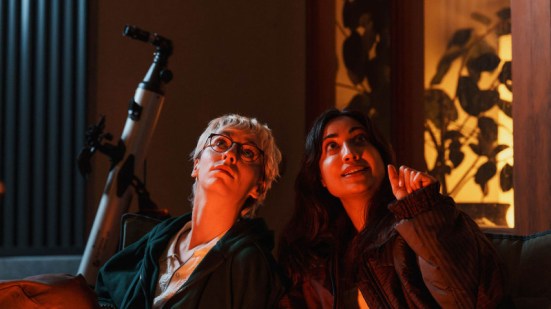
DIRECTOR: Alice Maio Mackay
PLOT: To save Earth from an insatiable alien, this slacker will need her dad and her effing loyal mates, who make a crap planet worth fighting for. Sheri (Sara Thompson, One of Us Is Lying) hasn’t been okay since her beloved grandma (Kerry Armstrong, Lantana, MIFF 2001) died. She’s over her annoying boyfriend Harry (Jordan Dulieu, The Serpent’s Skin), and resents her astronomer dad Hank (Scott Major, Neighbours) for avoidantly watching the skies. When a glowing green meteorite crash-lands near their small town and its passenger starts melding gruesomely with locals, humanity’s last hope is Sheri, her dad and her Scooby Gang of mates: Poppy (Annapurna Sriram, Fucktoys), Ash (Karis Oka, The Deb) and Finn (Jess McLeod, One of Us Is Lying), whose run-down video store has become the alien’s lair. Prolific Aussie queer-horror phenom Alice Maio Mackay (T Blockers), directing her seventh feature at the age of 21, merges retro schlock and teen-culture cool with a sincere affection for chosen family. It’s the opposite of effed-up that Major – the 90s Heartbreak High OG himself – stars here, and that she’s casting North Americans as rural Aussie retail shitkickers. Meanwhile, Mackay is building her own enviable friend gang: Our Effed Up World is produced by Jane Schoenbrun (I Saw the TV Glow, MIFF 2024), and it’s a joy to spot cameos from TV Glow star Jack Haven and Lesbian Space Princess (MIFF 2025) co-writer/director Leela Varghese.
PAPER TIGER
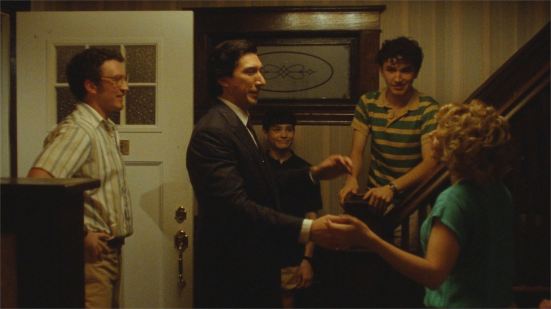
DIRECTOR: James Gray
PLOT: Adam Driver, Miles Teller and Scarlett Johansson lead James Gray’s Cannes-competing crime drama about a pair of go-getters who become embroiled with the Russian mafia. In 1986 New York, devil-may-care former cop Gary Pearl (Adam Driver, Paterson, MIFF 2016) pitches a lucrative construction project to his engineer brother Irwin (Miles Teller, Whiplash). The catch? The job is full of legal loopholes and encroaches on Russian-gang territory. Knowing his wife Hester (Scarlett Johansson, Marriage Story) wants an easier life, Irwin comes aboard – and the siblings quickly make bank. But when Irwin accidentally spies something he shouldn’t have, the mob starts threatening Hester, their two sons and everything the Pearls hold dear. Six-time Cannes Competition contender James Gray (The Lost City of Z, MIFF 2017) returns with another sagacious critique of the American Dream, this time leveraging personal experience to dramatise how unchecked aspiration can push well-meaning people onto questionable paths. While its escalating tension and depiction of the underworld’s suffocating clutches make it a taut thriller, Paper Tiger also unfolds as a sensitive study of how family can be both our greatest asset and our Achilles heel. The film’s male stars deliver career-best performances – Driver embodying Gary’s specious bravado; and Teller, Irwin’s sometimes-too-pliant earnestness – portraying two brothers whose ambition puts their bond to the test.
PARALLEL TALES
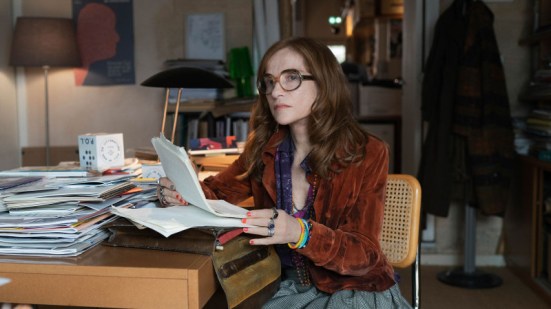
DIRECTOR: Asghar Farhadi
PLOT: In the latest Cannes-bowing psychological drama from Asghar Farhadi, Isabelle Huppert leads an all-star ensemble cast, playing a creatively blocked author whose voyeurism causes art and life to bleed into one another. Sylvie, a reclusive and irascible novelist living in squalor in Paris, struggles to get the creative juices flowing. To address this, she decides to train her telescope on the apartment across the street, where she spies two men and a woman fumbling around with sound recording equipment. Fascinated, she conjures up a melodramatic backstory for the threesome and starts typing. But when a stranger enters her orbit, the lines between fantasy, fabrication and fixation begin to blur. Asghar Farhadi’s follow-up to the Cannes Grand Prix–awarded A Hero (MIFF 2021) and Oscar winners The Salesman (MIFF 2016) and A Separation (MIFF 2011) is a suspenseful meta-thriller loosely based on the episode of Krzysztof Kieślowski’s Decalogue (MIFF 1990) that became A Short Film About Love. Co-written by Farhadi and his brother Saeed, the film evokes Hitchcock and Coppola but deploys its own psychologically complex provocation on truth, intention and interpersonal obsession. Elevated by Guillaume Deffontaines’s sumptuous cinematography and Zbigniew Preisner’s haunting score, the performances from Vincent Cassel (The Shrouds, MIFF 2024), Virginie Efira (A Private Life, MIFF 2025), Pierre Niney (The Count of Monte Cristo) and Adam Bessa (Ghost Trail, MIFF 2024) – along with screen legend Catherine Deneuve in cameo – are superb, while lead Isabelle Huppert shines as an ill-tempered artist desperate to cling on to fading relevance.
ROSE
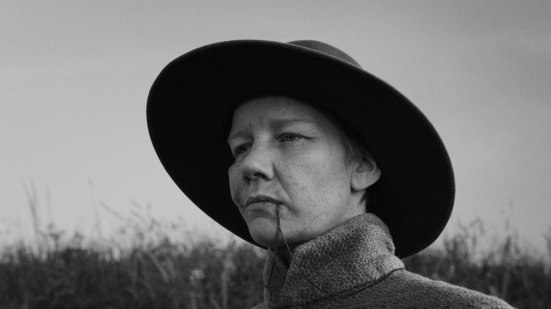
DIRECTOR: Markus Schleinzer
PLOT: Sandra Hüller’s knockout, Silver Bear–winning performance anchors this tragic folktale about a woman who poses as a male soldier in 17th-century Germany. From the battlefields of the Thirty Years’ War, a soldier arrives in a small German village carrying a document proving his inheritance of a local farm. Facially scarred by a bullet wound, this mysterious figure proves himself to be hardworking and brave, and slowly but surely insinuates himself into the community. But the soldier has a secret: he is, in fact, a woman named Rose masquerading as a man. When she is married off to a neighbour’s daughter – with children expected from the union – Rose’s deception is put to the test. Sandra Hüller, the Academy Award–nominated star of Anatomy of a Fall (MIFF 2023), gives a tour-de-force performance as Rose that earned her the Silver Bear for Best Leading Performance at this year’s Berlinale. Taking real-world inspiration from the notorious case of Martin Guerre, as well as hundreds of historical accounts of gender transgression, Markus Schleinzer’s (Angelo, MIFF 2019) third feature is a fascinating fictional character study.
THE SAMURAI AND THE PRISONER
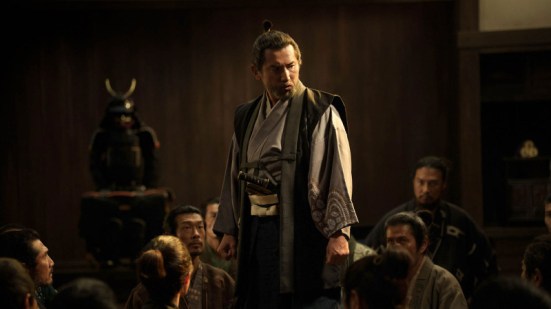
DIRECTOR: Kiyoshi Kurosawa
PLOT: Fresh from Cannes, this knockout historical thriller from genre master Kiyoshi Kurosawa finds mysteries afoot in a castle’s locked rooms. In 16th-century Japan, samurai lord Murashige Araki (Masahiro Motoki, Departures) is barricaded inside his own fortress, awaiting an attack from powerful rival warlord Nobunaga Oda. When Nobunaga’s famously wily envoy Kanbei Kuroda (Masaki Suda) arrives to deliver a warning, an enraged Murashige locks him in his dungeon. But after an unexplainable murder occurs within the castle walls, the embattled daimyō must turn to his prisoner, whose katana-sharp wits could help solve this crime – and to navigate the other mysteries and treacheries besieging Murashige. Eclectic veteran filmmaker Kiyoshi Kurosawa (Cloud, MIFF 2025) adds the samurai movie to his bag of tricks with this latest Cannes-premiering work, an adaptation of an award-winning 2021 novel by Honobu Yonezawa matching Cloud star Suda against a career-best Motoki. A tale of palace intrigue told via whodunnit riddles, The Samurai and the Prisoner is an epic crowdpleaser drawing on the contemplative, classical simplicity of mid-20th-century Japanese filmmaking.
SHEEP IN THE BOX
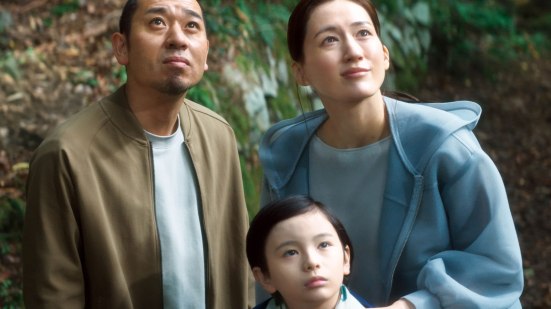
DIRECTOR: Hirokazu Kore-eda
PLOT: In Hirokazu Kore-eda’s sci-fi-inflected parable, a bereaved couple adopt an AI-powered android to deal with a tragic loss. In a near-future Japan of delivery drones and diet-monitoring fridges, REbirth has devised the ultimate remedy for grieving parents: a ‘replacement’ in the form of an anthropomorphic robot. Two years prior, an accident took architect Otone and carpenter Kensuke’s son Kakeru; when REbirth offers them a free trial, Otone doesn’t hesitate. While she becomes enamoured of the revived Kakeru, Kensuke is sceptical: “It’s a Tamagotchi. It’s a Roomba.” Gradually, they learn that making do is not the same as moving on. Despite its sci-fi trappings, Sheep in the Box is, more accurately, a study of complicated families, building on director Hirokazu Kore-eda’s earlier works Broker (MIFF 2022), Like Father, Like Son (MIFF 2013) and the Palme d’Or–winning Shoplifters (MIFF 2018). Inspired by an illustration from The Little Prince and evoking Pinocchio with its (not so) ‘real boy’, the film raises questions about humanity, loss and the ways technology can both help and harm. Actors Haruka Ayase (Our Little Sister, MIFF 2015) and Daigo movingly portray Otone’s technophilia and Kensuke’s neo-Luddism as synecdoche for coping, while Rimu Kuwaki precociously imbues the robotic Kakeru with an affecting emotional depth.
SPECIES
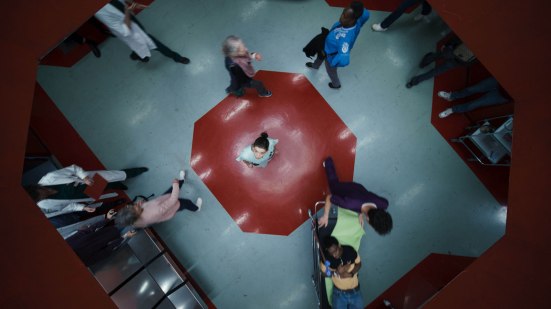
DIRECTOR: Marion Le Corroller
PLOT: A stressed-out young doctor suspects hostile jobs are doing something gnarly to her generation. Turns out work doesn’t just suck – it mutates. Margot (Mara Taquin, Zero Fucks Given) has worked hard to land her first job as a doctor in France’s most prestigious emergency department. But even in this life-and-death medical field, Charles Boyau Hospital is a brutal pressure cooker: the relentless competition among colleagues and merciless production-line pace set by her boss Hélène (Karin Viard, Polisse, MIFF 2011) have Margot so stressed that she’s literally sweating blood. She recalls treating similar unexplained symptoms in patients her own age: young professionals in French workplaces are brutally lashing out, seeming somehow to be … changing. Is this extreme burnout, a novel virus or a transformative environmental adaptation? Premiering in the Cannes Midnight Screenings section, Marion Le Corroller’s brash debut feature shares a blood type with her body-horreur compatriots Coralie Fargeat (The Substance, MIFF 2024) and Julia Ducournau (Titane, MIFF 2021). But Species delivers its critique of ‘rise-and-grind’ productivity culture with an axe, not a scalpel: every frame is a gonzo frenzy, captured expressionistically by cinematographer Guillaume Schiffman at tilted angles and through fish-eye lenses, all set to a pulsating electronic score by ROB. Imagine Philip Brophy’s Body Melt (MIFF 1994) infecting The Pitt and you might at least have the right genus … but Species is a breed all its own.
THE SUN NEVER SETS

DIRECTOR: Joe Swanberg
PLOT: A radiant Dakota Fanning anchors US indie cinema luminary Joe Swanberg’s long-awaited return: a canny and heartfelt love-triangle dramedy set in Alaska. Wendy (Dakota Fanning, Once Upon a Time in Hollywood, MIFF 2019) is 31 years old and happily in love with Jack (Jake Johnson, Safety Not Guaranteed, MIFF 2012), a divorcee in his 40s. The only snag in their age-gap relationship: she wants to have children, but he doesn’t want more than the two he already has; he’s also leery of getting married again. Hoping to inspire her to outgrow those particular urges, Jack proposes a six-month break in which she might dive into the Anchorage dating pool. What he hasn’t accounted for is the reappearance of Wendy’s handsome ex, a pilot who may prove less flighty than he once was. The Sun Never Sets marks the first full-length feature in nearly a decade by Joe Swanberg (Drinking Buddies, MIFF 2013), an auteur who helped to forge the mumblecore lexicon – and launch the acting career of Greta Gerwig – with such heavily improvised and incredibly frank flicks as Hannah Takes the Stairs and Nights and Weekends. Though suffused with the same bracing candour and wit as those earlier, lo-fi ventures, Swanberg’s latest is captured on handsome 35mm film.
SWEET AS MILK
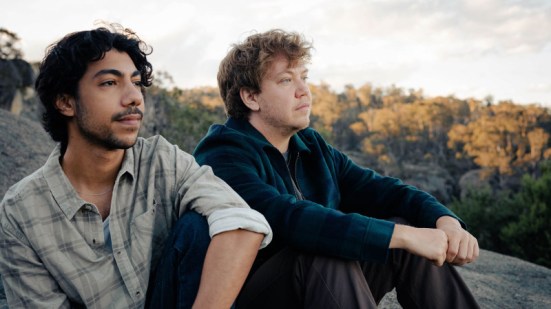
DIRECTOR: Harvey Zielinski
PLOT: After being mistaken for his brother, a young trans man adapts to a precarious new life in his estranged father’s rural town. City boy Jake is at a loose end. Unemployed, single and holed up in a granny flat behind his family home, he lives in the shadow of his cisgender twin brother, successful real estate agent Sam. On an impulse, he takes a trip to the remote country town of Sweet Milk, where his terminally ill, estranged father (Kieran Darcy-Smith) still lives, totally unaware that Jake has transitioned. When his dad mistakes him for Sam and Jake misses the moment to correct him, an unforeseen opportunity lands in his lap: to fit in as masculine in a place where nobody suspects he’s trans. Adopting Sam’s identity, he manages to connect with his father for the first time, while a budding romance with local Toby (Hunter Page-Lochard, Kid Snow, MIFF 2024) – himself an outsider in this macho setting – offers further reinvigoration. But the longer Jake spends in Sweet Milk, the more tangled the web he weaves. How long can he hold on to his secret, and what will happen if the truth gets out? Drawing on his own experiences, debut filmmaker Harvey Zielinski also stars in the dual roles of Jake and Sam in this fish-out-of-water dramedy supported by the MIFF Premiere Fund – a raw, sensitive tale about the long road to self-acceptance and the lies we feel we need to tell to fit in.
TANGLES
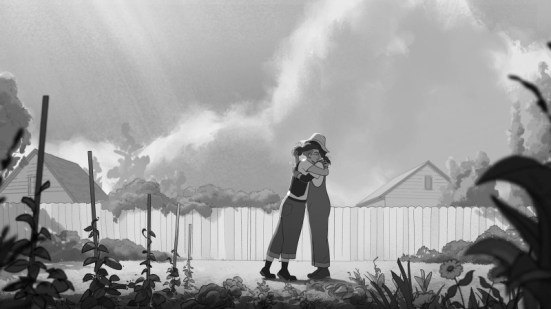
DIRECTOR: Leah Nelson
PLOT: Sarah Leavitt’s acclaimed graphic novel about Alzheimer’s is brought to the screen with an exceptional voice cast including Abbi Jacobson, Julia Louis-Dreyfus and Bryan Cranston. Sarah is in her twenties and embracing life in San Francisco, where she has a job she loves at a queer magazine and a new girlfriend she adores even more. It’s 1999, and the future looks bright. But on a trip back home to the conservative Maine town she only recently escaped, she notices something’s not quite right with her mum, Midge. When the diagnosis comes – early-onset Alzheimer’s disease – Sarah finds herself caught between two worlds, juggling the life she was just beginning with the one she thought she’d left behind. Working closely with Sarah Leavitt, the author of the graphic novel Tangles: A Story about Alzheimer’s, My Mother and Me, debut director Leah Nelson has created an exceptionally moving tribute – not only to the source material, but also to everyone touched by the ruthless tangles of Alzheimer’s. The gorgeous, mostly black-and-white, hand-drawn animation pays homage to the book while not replicating it, and weaves seamlessly from authenticity to surreal fantasy as the story dictates. Featuring a voice cast that includes Abbi Jacobson, Julia-Louis Dreyfus, Bryan Cranston, Seth Rogen, Samira Wiley, Beanie Feldstein, Pamela Adlon, Sarah Silverman, Bowen Yang and Wanda Sykes, Tangles is a playful, sweet and achingly honest film about family, love and the brutal truths of a cruel disease. Bring tissues.
Well, there you have it. These are the 27 films I’ll be seeing at MIFF 2026. Keep a look for my reviews/thoughts/first reactions to all these films on both my Twitter and Bluesky accounts.
Article written by Bede Jermyn

