It’s August here in Australia. Do you know what that means? One of Australia’s most popular film related events The Melbourne International Film Festival (or MIFF for short) is back to deliver cinemagoers the best and most acclaimed films from all over the world for 18 days. For me personally, going to MIFF is one of my favourite times of the years. Having covered the festival for the site every year (well… except in 2020/2021 for obvious reasons) since 2012, to say that I’m excitied would defintiely be an understatment. Over 275 films (features, documentaries, shorts etc.) will be playing at the festival in cinemas across Melbourne between August 7th-24th. Some even making their world premires here, including many Australian films. While there are some high-profile films that are playing at MIFF, like I’ve stated in previous years, I’m going to be mostly focusing on films that either don’t have a release date as of yet or they won’t be released until a much later date (whether that will be later this year or sometime in 2026). However, I’ve made an exception with a couple of films since I couldn’t wait to see them. After going through the program, I’ve narrowed down my list to 30 films that I plan on seeing at MIFF. Even though 30 is still quite a lot, it actually is a smaller compared to previous years, which I usually see 40 or more. Unfortunatley, due to both work and a few other things, I won’t be able to see that many this year. Honestly, I did want to cut back this year so I don’t suffer from festival fatigue as I did the past two MIFFs. Now you’re probably wondering, which 30 films are they? Well, without further ado. Here’s my complete rundown of everything that I’ll be seeing at MIFF 2025…
BLUE MOON
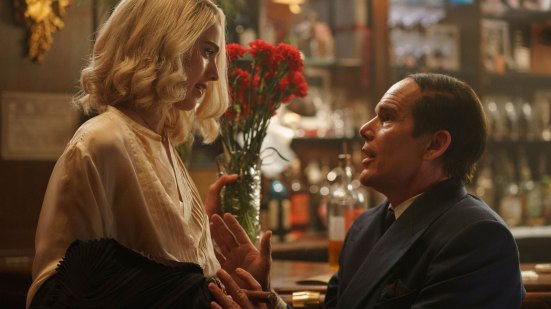
DIRECTOR: Richard Linklater
PLOT: Ethan Hawke brings legendary Broadway lyricist Lorenz Hart to life in Richard Linklater’s A-list ensemble portrait of fallen stardom. It’s 31 March 1943: the opening night of Oklahoma!, the first musical collaboration between Richard Rodgers and Oscar Hammerstein II. But the celebratory afterparty at iconic Theater District institution Sardi’s is haunted by Rodgers’s former collaborative partner Lorenz Hart, an embittered, sharp-tongued wordsmith drinking himself into an early grave. As Hart laments his failing career and the changing nature of musical theatre, eternal questions about the relationship between art, commerce and the audience take centre stage. Revered US filmmaker Richard Linklater (Boyhood, MIFF 2014) synthesises the backstage showbiz lore approach of his 2008 period drama Me and Orson Welles with the conversational, philosophical mode of his beloved Before trilogy to craft an engaging chamber drama. Marking the ninth collaboration between Linklater and Ethan Hawke, who brilliantly embodies the troubled songwriter – and also featuring Margaret Qualley, Bobby Cannavale and Andrew Scott, who received the Silver Bear for Best Supporting Performance at the 2025 Berlinale for his turn as Rodgers – Blue Moon offers an incisive character study of a complicated protagonist and a glorious showcase for one of the great ongoing actor–director partnerships of American independent cinema.
BY DESIGN

DIRECTOR: Amanda Kramer
PLOT: In this absurdist satire from maverick indie filmmaker Amanda Kramer, a woman is magically transformed into a chair – and discovers that everyone likes her better that way. On an antique-shopping expedition with bitchy friends, lonely and dissatisfied Camille (Juliette Lewis) is gripped by envy at the sight of a particularly sublime chair: “its beauty, its usefulness, its deserving of praise”. Her yearning is literalised when she swaps bodies with the piece of furniture, inhabiting its unmoving wooden structure as her human body turns lifeless, motionless – chair-like. While her friends and mother love this new silent and compliant Camille, the chair ends up in the possession of heartbroken Olivier (Mamoudou Athie), who grows increasingly enchanted by it. Is Olivier merely in love with the chair’s gorgeous design, or is he falling for the trapped soul of Camille? At once sharply satirical and utterly deranged, Amanda Kramer’s (Give Me Pity!, MIFF 2022) singular riff on the body-swap trope offers a searing critique of objectification and the contemporary obsession with image-making. Narrated by Melanie Griffith, replete with fellow 90s screen icons (Lewis, Samantha Mathis, Robin Tunney) and featuring a truly wild Udo Kier cameo, By Design takes its strange premise to unhinged – and un-upholstered – places, full of interpretive dance, outsized performances and throbbing sexuality.
CHAIN REACTIONS
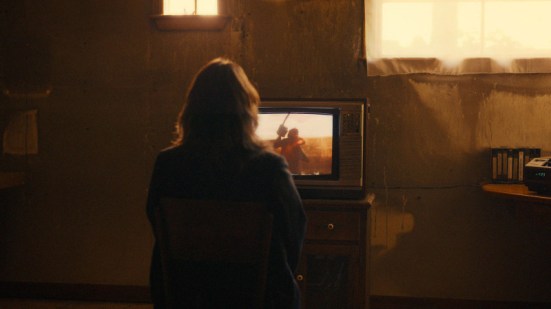
DIRECTOR: Alexandre O. Philippe
PLOT: The winner of the Best Documentary on Cinema prize at Venice revs up and rips into perhaps the greatest slasher movie ever made: The Texas Chainsaw Massacre. Documentarian Alexandre O. Philippe has made a career out of his obsession with movies. From The People vs. George Lucas to MIFF hits 78/52 (MIFF 2017) and Lynch/Oz (MIFF 2022), Philippe’s films are love letters to cinema and its capacity to shape the way we see the world. In Chain Reactions, he turns his attention to Tobe Hooper’s game-changing 1974 horror The Texas Chainsaw Massacre, exploring its lasting legacy – on the genre, on the culture and on filmmaking itself. Released to commemorate the film’s 50th anniversary, Philippe’s documentary carves out space for five of its most passionate devotees – comedian Patton Oswalt, director Karyn Kusama, J-horror maestro Takashi Miike, novelist Stephen King, and beloved Melbourne film critic and renowned author Alexandra Heller-Nicholas – to expound on their enduring love for The Texas Chainsaw Massacre, and how Leatherface and his family of American cannibals changed their lives. Shot in an expressionistic replica of the original’s farmhouse and intercut with iconic scenes and never-before-seen outtakes, Chain Reactions offers a fascinating insight into one of cinema’s most influential genre works.
THE CHRONOLOGY OF WATER
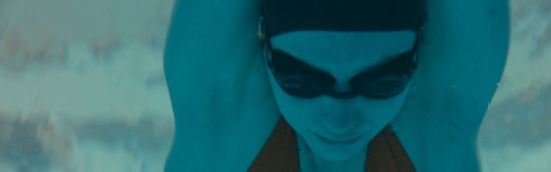
DIRECTOR: Kristen Stewart
PLOT: Kristen Stewart’s splashy Cannes-premiering directorial debut poetically adapts writer Lidia Yuknavitch’s memoir. Lidia (an astonishing Imogen Poots, Vivarium, MIFF 2019) only feels whole when she’s in the water. Kicking through lap after lap, she can temporarily float free of the cold, rageful father who sexually abused her and her older sister Claudia (Thora Birch) while their apathetic mother turned away. Out of the pool, Lidia flounders, ruining her college swimming scholarship with booze, drugs and reckless sex and lashing out contemptuously at anyone who shows her kindness. But when she joins a collaborative creative writing class led by One Flew Over the Cuckoo’s Nest author and countercultural hero Ken Kesey (Jim Belushi), Lidia finds the same fluid escape in writing. She’s back in her lane – focused, flourishing. As an actor, Kristen Stewart (Personal Shopper, MIFF 2016) has been one of cinema’s most subtle, fascinating interpreters of interiority. So it makes sense that her directorial debut, an adaptation of Lidia Yuknavitch’s visceral 2011 memoir, is no average creative biopic. Eschewing unnecessary exposition, Stewart invites comparisons to Terrence Malick as she tells Lidia’s story in intense, elliptical vignettes that ebb and flow on currents of memory, while Poots is as tender and fierce onscreen as she is dreamlike and sardonic in voiceover.
CUTTING THROUGH THE ROCKS
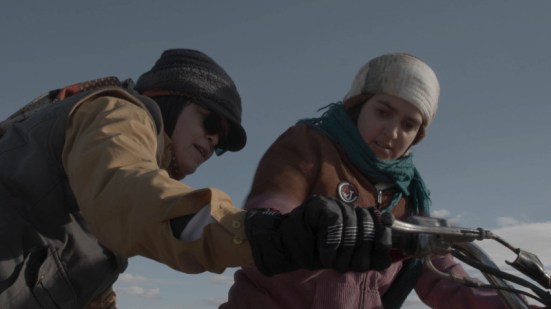
DIRECTOR: Sara Khaki & Mohammadreza Eyni
PLOT: This Sundance Grand Jury Prize winner profiles a brazenly feminist, motorbike-riding Iranian trailblazer – the first woman elected to public office in her remote community. At the age of 37, Sara Shahverdi has accomplished many things: survived a divorce, mastered the motorcycle, delivered hundreds of babies as a midwife and, most significantly, made history as her village’s first ever female councillor. She’s the epitome of the forward-thinking rebel who cares not for what others think – to the mutual awe and disbelief of many in her traditional community – and her main objective has been to fight for the rights of women and girls, especially those at risk of child marriage. But in deeply conservative Iran, a woman on a mission will inevitably ruffle many a feather. Shot in a vérité style by US-based husband-and-wife team Mohammadreza Eyni and Sara Khaki, this uplifting chronicle of a real-life hero follows Shahverdi during her campaign trail, eventual landslide victory and its aftermath. But this is no hagiography: footage of Shahverdi fulfilling election promises, making school visits and pushing for legislation changes is complemented by scenes of subversive tactics, scuffles with family and exasperated outbursts. Awarded the World Cinema – Documentary Grand Jury Prize at this year’s Sundance Film Festival, Cutting Through Rocks is a warts-and-all portrait that is as spirited, spiky and inspirational as its indomitable leading woman.
EDDINGTON

DIRECTOR: Ari Aster
PLOT: Enter the epicentre of COVID-era chaos in the latest star-studded black comedy from horror maestro Ari Aster. Trigger warning: it’s May 2020, and the world’s about to lose its mind while staring down COVID-19. In the fictional New Mexico town of Eddington, that sets mask mandate–avoiding sheriff Joe Cross (Joaquin Phoenix) against mayor Ted Garcia (Pedro Pascal), who’s all for inviting an energy- and job-draining AI hub into the community. Throw in Joe’s troubled wife (Emma Stone), who’s navigating a traumatic past; her conspiracy theory–spouting mum (Deirdre O’Connell); a slippery snake-oil guru covered in tattoos (Austin Butler); and a white woman (Amélie Hoeferle) who’s so oblivious to her own privilege that she commandeers the local Black Lives Matter movement and hectors her African-American ex, deputy sheriff Michael (Micheal Ward), for not joining in, and the scene is set for a wild western that’s destined to spiral out of control into brutal violence. Screening in Competition at the 2025 Cannes Film Festival, the latest absurdist nightmare vision from Midsommar director Ari Aster is a comedy so dark that you may feel bad for laughing. Cutting a slice of rotten Americana straight from the headlines, Eddington asks if it’s even possible to sew up the gaping fissures of a society that, five years on from the start of the pandemic, only appears to be getting worse.
ENZO

DIRECTOR: Robin Campillo
PLOT: Robin Campillo directs a sensual queer coming-of-age tale of a bourgeois French teen and the Ukrainian labourer who shakes up his world. Enzo’s family have a villa with a pool and ocean views, but he doesn’t feel at home there. So, against his parents’ wishes, the 16-year-old drops out of school and gets a job at a nearby construction site. He’s terrible at it, but he derives pleasure from working with his hands alongside the other labourers – especially Ukrainian immigrant Vlad, who is torn about whether to stay or to return and fight in the war. Charismatic, capable and a true salt-of-the-earth man, Vlad is everything Enzo wishes he was, and his admiration soon evolves into something more. Opening the Directors’ Fortnight section of the 2025 Cannes Film Festival, Enzo was initially slated for direction by co-writer Laurent Cantet (Heading South, MIFF 2006; The Class) before his death in 2024, leading long-time friend and collaborator Robin Campillo (BPM, MIFF 2017) to take the reins. The resulting feature blends Cantet’s interest in class with Campillo’s observant humanism, the camera capturing scenes of tender camaraderie and following Enzo as he finds himself. In the lead role, Eloy Pohu expertly channels the cocktail of traits – arrogant but lost; curious but closed off; wanting to be loved but wary of vulnerability – that mark male adolescence, providing a magnetic if enigmatic lodestone for this delicate tale of alienation, belonging and growth.
EXIT 8
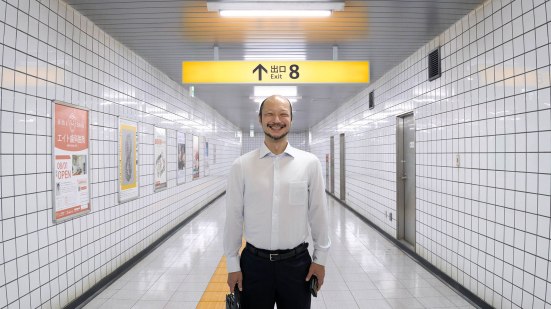
DIRECTOR: Genki Kawamura
PLOT: A Tokyo commuter gets trapped in an infinitely looping subway station in this mind-bending adaptation of the hit indie videogame. An unnamed protagonist steps off a busy Tokyo train into a nondescript subway passage: white-tiled walls, a handful of advertisements and one lone salaryman striding down the corridor. After walking ahead and taking a few corners, the commuter finds himself back where he started. Then he notices a sign with an ominous set of rules: if you find an anomaly, turn back immediately; if you don’t find an anomaly, keep going. The longer he stays, the weirder things get, and his only hope of ever leaving this purgatory is by playing a deadly game of spot the difference. Adapted from the cult videogame, Exit 8 establishes a distinctive, liminal setting, which production designer Ryo Sugimoto transforms from a generic subway station into an uncanny labyrinth with sinister surprises around every bend. Building on the simple source material, writer/director Genki Kawamura (a producer on Monster, MIFF 2023) contextualises the commuter’s internal world with a tense opening sequence and subsequent interludes that offer insight into his isolation, discontent and fears of fatherhood, adding emotional heft to his Kafkaesque odyssey. Variously evoking The Shining, Run Lola Run (MIFF 1999), Squid Game and Cube, this is a singular cinematic experience viewers won’t want to leave behind.
IT WAS JUST AN ACCIDENT

DIRECTOR: Jafar Panahi
PLOT: Winning the Palme d’Or at the 2025 Cannes Film Festival, Jafar Panahi’s revenge thriller is both a broadside and real-world triumph against authoritarian oppression. When a traveller with a distinctively squeaky prosthetic leg arrives at his auto-repair shop one night, Vahid is convinced that it’s the officer who tortured him in prison years ago. Although he was always blindfolded when it happened, he’d recognise the sound of that leg anywhere – and so, seizing the opportunity for revenge, Vahid abducts the man and transports him to the desert, intending to bury him alive. But before he can do the deed, Vahid’s conscience halts him: what if he’s kidnapped the wrong person? Over a frenzied 24 hours, he sets out to find other former prisoners who can verify the man’s identity, amassing an unlikely group of co-conspirators along the way, each of whom carries their own motivation for vengeance. Previously subjected to lengthy filmmaking and international travel bans and forced to film in secret even after his release, Iranian master director Jafar Panahi (No Bears, MIFF 2023) claimed cinema’s most coveted prize at Cannes for this incendiary thriller. Combining pitch-black gallows humour and devastating plot twists with elements of real stories Panahi heard from fellow prison inmates, this rage-filled rallying cry against state-sanctioned censorship and violent oppression courageously interrogates the morality of retribution.
THE LITTLE SISTER
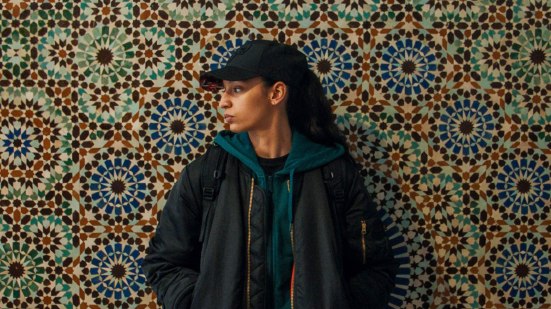
DIRECTOR: Hafsia Herzi
PLOT: This tender coming-out drama blessed with a star-making lead turn won the Queer Palm as well as the Best Actress Award for Nadia Melliti at the 2025 Cannes Film Festival. Seventeen-year-old Fatima (Nadia Melliti) is the youngest – and quietest – of three sisters in a vibrant, suburban French-Algerian home: a daughter devoted to football, family and study, with an approved Muslim boyfriend by her side. When she begins studying philosophy in Paris, however, she starts dating women, including the charismatic but troubled Ji-Na (Ji-Min Park, Return to Seoul, MIFF 2022; A Private Life, MIFF 2025). Embarking on a journey of self-discovery, Fatima has to balance her sexual awakening with her traditional upbringing, and make sense of how her desires and faith can be reconciled. Two-time César-winning French actor Hafsia Herzi (Couscous; House of Tolerance) brings a sure directorial hand to her delicate tale of self-discovery, co-scripted with Fatima Haas in an adaptation of the latter’s 2020 autofiction novel The Last One. Offering a warm-hearted, well-judged portrait of a personal and erotic transformation, it features a brilliant, magnetic lead performance from newcomer Melliti that was duly awarded with the top acting prize at Cannes.
LURKER
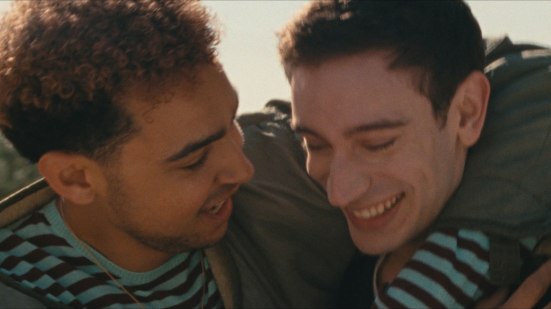
DIRECTOR: Alex Russell
PLOT: A cunning wannabe enters the orbit of an ascendant celebrity in this thrillingly tense debut about the hunger for – and hollowness of – stardom. In a chance meeting in a clothing store, geeky shop attendant Matthew manages to charm Oliver, a pop star on the cusp of greatness. He quickly finds himself invited to his inner circle, where the musician’s entourage – manager Shai, filmmaker-on-retainer Noah, sound engineer Bowen and long-time pal Swett – are immediately suspicious of this interloper’s presence. Despite their cattiness, Matthew gradually ingratiates himself with Oliver, usurping Noah’s role as personal documentarian. At Oliver’s side, he finally feels like a somebody … and he’s not going to let anyone, or anything, take away his spotlight. Screening at Sundance and Berlin, the engrossing directorial debut of TV producer and screenwriter Alex Russell (The Bear; Beef) collides the celebrity jealousies of All About Eve and Ingrid Goes West (MIFF 2017) with the obsessive fixation of Saltburn (also starring Archie Madekwe). Backed by a stand-out supporting cast who convincingly portray the territoriality of A-list circles, Madekwe deftly reveals Oliver’s veiled yet vulnerable egocentrism, while Théodore Pellerin (Never Rarely Sometimes Always) unnervingly embodies Matthew’s calculated desperation. With dynamic lensing by DOP Pat Scola (Sing Sing, MIFF 2024), Lurker is a striking, shrewd critique of exploitation and superficiality in the entertainment world that shows there are no winners in the battle for fame.
THE MASTERMIND
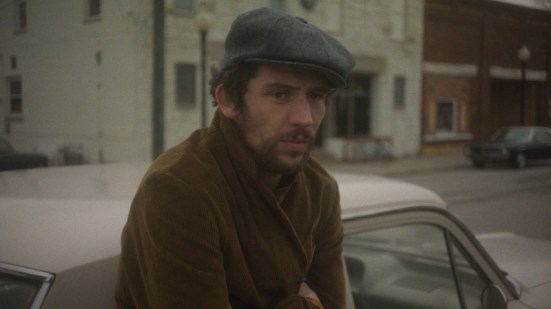
DIRECTOR: Kelly Reichardt
PLOT: Josh O’Connor headlines indie icon Kelly Reichardt’s 1970s-set spin on the heist movie, a moving and wryly funny Cannes Competition highlight. Aimless J.B. (Josh O’Connor, Rebuilding, MIFF 2025), a former art student who’s fallen on hard times as an out-of-work carpenter, has hatched a cunning plan: to steal a handful of paintings from a small museum outside of Boston. It may seem like a bad idea, but he’s got it all figured out … save for what to do with his kids while the theft is taking place, and what to do with the paintings once he has them. Kelly Reichardt’s (First Cow, MIFF 2020) empathetic portraits of characters consigned to the fringes, from frontier times to present-day suburbia, have made her an icon of American independent cinema. Built around O’Connor’s remarkable portrayal of a hapless daydreamer carrying out a harebrained scheme, along with Alana Haim (Licorice Pizza) as his increasingly frustrated wife, and Gaby Hoffmann (Crystal Fairy and the Magical Cactus, MIFF 2015) and frequent Reichardt collaborator John Magaro (Showing Up, MIFF 2023) as old friends who offer refuge, The Mastermind is Reichardt’s most openly comedic work yet; but it’s also as artistically rigorous as anything she’s previously turned her camera to. Deftly undoing the cinematic clichés of the heist movie while also paying homage to the New Hollywood classics of the era in which the film is set – at the outset of the 1970s, with the Vietnam War and Richard Nixon’s presidency at their height – this Cannes-premiering tour de force conveys a national narrative in microcosm.
MIRRORS NO. 3
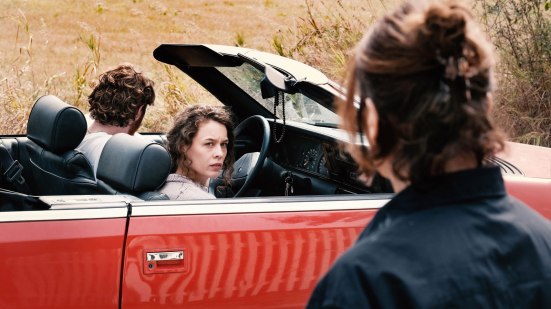
DIRECTORS: Christian Petzold
PLOT: Christian Petzold’s first film to screen at Cannes is a ghost story wrapped in a family drama, subtle and soft around the edges but with an enigmatic psychological ebb. After music student Laura survives a deadly car crash, she’s taken in by Betty, a middle-aged woman who witnessed the accident. Betty’s home is calm and centring for the traumatised Laura, whose presence seems to have a similarly healing effect on Betty and, despite some initial resistance, on her husband and son. But the centre cannot hold; why is Betty so willing to let a stranger live in her home? Why does Laura so compliantly play along? And what will happen when the past comes back to haunt both women’s present? Working again with muse Paula Beer (Afire, MIFF 2023), effortlessly mysterious here as the emotionally adrift Laura, MIFF regular Christian Petzold composes another intimate story of personal grief and human connection. Named after the Ravel piano suite that Laura plays in the final act, Mirrors No. 3 is as tantalisingly ambiguous as it is sweetly humorous, and – like all his works – elegant, intriguing, restrained and deeply human.
MY FATHER’S SHADOW

DIRECTOR: Akinola Davies Jr
PLOT: In the first Nigerian film to premiere at Cannes, a father tenderly reconnects with his young sons during a momentous day under the Lagos sun. Remi and his younger brother Aki (played respectively by impressive siblings Chibuike Marvellous Egbo and Godwin Egbo) are shooting the breeze, waiting for their mother to return home from the village, when they are shocked by the unexpected arrival of their often-absent father, Folarin (Ṣọpẹ́ Dìrísù, Gangs of London) – a towering but tender man whose deep love for his sons requires difficult compromises. On a determined mission to hunt down unpaid wages, he decides to take them on a long journey to the sprawling metropolis of Lagos. The day that unfolds, in the shadow of the violently contested 1993 election, will dramatically reshape the boys’ future. The semi-autobiographical debut feature of Nigerian-born, London-based filmmaker Akinola Davies Jr – co-written with his brother Wale Davies, who first developed the idea for the film – draws deeply from the well of memory. Fictionalising a fraught real-life period in Nigeria’s democratic history, the film honours the sacrifices family often requires while dispelling damaging myths around Black masculinity. Selected to play in Un Certain Regard at the 2025 Cannes Film Festival, this luminous offering received a Caméra d’Or – Special Mention.
THE PRESIDENT’S CAKE
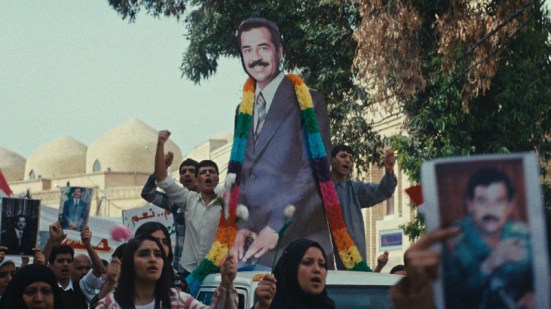
DIRECTOR: Hasan Hadi
PLOT: A young girl is tasked with baking a cake to celebrate Saddam Hussein’s birthday in this playful fable that won two awards at Cannes including the Caméra d’Or. In 1990, nine-year-old Lamia lives with her grandmother Bibi and her beloved cockerel Hindi in Iraq’s Mesopotamian marshes. Harsh international sanctions have sent basic living costs skyrocketing; but even though his people are hungry, Iraqi president Saddam Hussein still demands that the nation celebrate his birthday, replete with a lavish cake. Assigned to bake such a cake for her local school – with severe consequences on offer if she fails – Lamia teams up with her pal Saeed to undertake an odyssey of procuring flour, eggs and sugar in a place where they’re in desperately short supply. Returning to the site of his childhood experiences in Iraq, writer/director Hasan Hadi delivers a distinctive debut feature, brought to screen with the backing of executive producers Marielle Heller (The Diary of a Teenage Girl, MIFF 2015), Chris Columbus (Home Alone) and co-writer Eric Roth (Killers of the Flower Moon). Telling a timely tale of life under a dictatorship as seen through the eyes of a child, Hadi’s film draws from neighbouring Iran’s cinematic tradition of symbolic stories led by young protagonists. Arriving direct from Cannes, where it premiered in the Directors’ Fortnight, The President’s Cake marks the arrival of an impressive new voice.
A PRIVATE LIFE
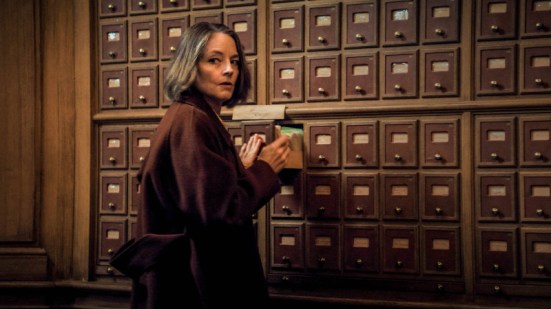
DIRECTOR: Rebecca Zlotowski
PLOT: Jodie Foster delivers a delightful bilingual performance as a neurotic therapist turned amateur sleuth in this slippery thriller that charmed Cannes. Liliane (Jodie Foster, in her first French-language film since Jean-Pierre Jeunet’s A Very Long Engagement) is an American psychiatrist working in Paris. Classy, controlled, ever the professional, she is thrown when she discovers that her patient Paula has unexpectedly died by suicide. She can’t shake the feeling that foul play may have been involved in Paula’s death – if only because that would absolve her of responsibility! – so she dives into her therapy session recordings for clues, and starts hunting around for possible suspects. From ex-husbands to doctors, hypnotists to fellow psychiatrists, Liliane will turn to anyone except herself for answers. Director Rebecca Zlotowski (Other People’s Children; Planetarium; Grand Central) helms a zany, immensely entertaining thriller that balances Hitchcockian twists with an irrepressible sense of fun. Premiering at Cannes, A Private Life earned wide acclaim for Foster’s up-for-it leading turn as a highly strung shrink, which comes opposite a veritable who’s-who of French cinema, including Daniel Auteuil, Mathieu Amalric, Vincent Lacoste, Virginie Efira and Irène Jacob, as well as rising star Park Ji-min (The Little Sister, MIFF 2025). There’s even a cameo from 95-year-old cinema legend and MIFF perennial Frederick Wiseman in a cheekily wise role.
REFLECTION IN A DEAD DIAMOND
DIRECTOR: Hélène Cattet & Bruno Forzani
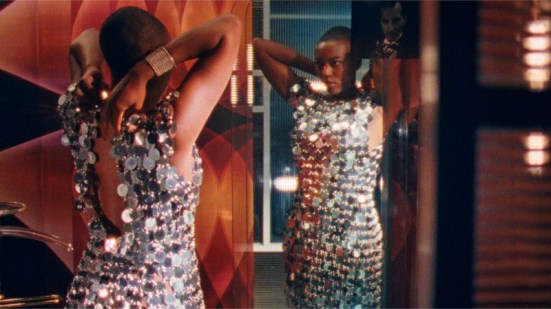
PLOT: The filmmakers behind Let the Corpses Tan (MIFF 2018) bring a touch of Dario Argento’s brutally surreal aesthetic to their homage to 60s-Bond-style sexy spy thrillers. Waves crash and the drinks fizz as a lonely old man (prolific Italian genre star Fabio Testi) lounges on the beach terrace of his luxurious hotel, nestled on the sparkling curve of the Côte d’Azur. But when the beautiful young woman he’s been ogling winds up dead by the water, time folds in on itself. A quest to uncover her killer ignites cascading flashes of his younger, sharp-suited, shooting days as a secret agent (now played by Yannick Renier) thwarting Fumetti neri-esque pulp fiction supervillains. Diamonds, leather and lashings abound as he battles the cobra’s kiss of shapeshifting agent Serpentik and teams up with glamorous, disco-ball-outfitted sidekick Moth. Chaos awaits in a casino’s gilded glimmer. In their latest feature, Belgian-based French filmmaking couple Hélène Cattet and Bruno Forzani have done for 007-style secret agent romps what they spectacularly achieved for spaghetti westerns in Let the Corpses Tan and avant-garde Italian horror in The Strange Color of Your Body’s Tears (MIFF 2018). Debuting in competition at Berlinale, Reflection in a Dead Diamond fuses Eurotrash flesh onto giallo bones to breathe life into a deliriously entertaining, drop-dead-gorgeous pastiche.
RENOIR

DIRECTOR: Chie Hayakawa
PLOT: This Cannes Competition highlight is a tender, memoir-etched coming-of-age portrait of formative loneliness and loss. It’s 1987 in Tokyo, and 11-year-old Fuki is a daydreamer stuck in a society fixated on work, wealth and diligence. Her father (Lily Franky, Shoplifters, MIFF 2018) is dying of terminal cancer, and her mother is preoccupied with both a new job and caring for her husband. With modern technology offering each member of the family distractions from their insurmountable problems – be they miracle cures, quick fixes, parasocial connection or a balm for loneliness – Fuki builds her own imaginary world via a dating hotline she secretly listens in on. Screening in Competition at the 2025 Cannes Film Festival, Renoir is the second impressive feature directed by Chie Hayakawa, whose dystopian, euthanasia-themed Plan 75 (MIFF 2022) previously bewitched audiences. Drawing from her own experience of losing her father to cancer in her childhood, Hayakawa crafts a finely-honed coming-of-age tale free from clichés. Shot through with a sense of realism, humanity and drama reminiscent of the subtle works of Hirokazu Kore-eda and Yasujirō Ozu, this is a beautiful, illuminating cine-memoir grappling with mortality, melancholy, isolation and the unspoken.
RESURRECTION
DIRECTOR: Bi Gan
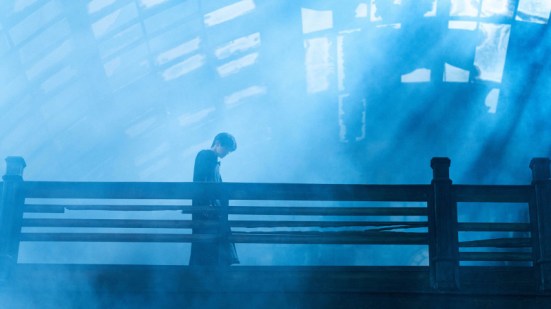
PLOT: Winner of the Cannes Prix Spécial, the third feature from Bi Gan is a sweeping sensorial odyssey and a meditation on human and film history. Somewhere in the future, humans have discovered the secret to immortality: not dreaming. While most of society has embraced this practice, rebellious Fantasmers continue indulging in nightly reveries, obligating the Big Others to put a stop to their defiance. One such Fantasmer, now decrepit and monstrous, escapes into the dream realm. As a Big Other chases after him, the film shapeshifts across genres and epochs, prioritising a different bodily sense over each of its five chapters. This breathtaking, convention-defying phantasmagoria sees Bi Gan (Long Day’s Journey Into Night, MIFF 2019) assemble myriad cinematic references – silent film, German expressionism, Andrei Tarkovsky, Alfred Hitchcock, Wong Kar-wai, Tsai Ming-liang – with the skill of both a master storyteller and a true cinephile. It’s also yet another showcase of his and returning DOP Dong Jingsong’s talents for visualising the oneiric, here enhanced by electro-synth group M83’s morphing score. Starring Chinese heartthrob Jackson Yee and Hou Hsiao-hsien regular Shu Qi (The Assassin, MIFF 2015; Millennium Mambo, MIFF 2002), Resurrection dabbles in manifold metaphors: cinema’s and vampires’ shared dependence on darkness; China’s ascent into modernity’s ‘light’; the haziness of memory; the surreal logic of simulations. But, at heart, it embraces the dual function of dreams – as escapism, and as a way to envisage anew.
THE RIVALS OF AMZIAH KING
DIRECTOR: Andrew Patterson
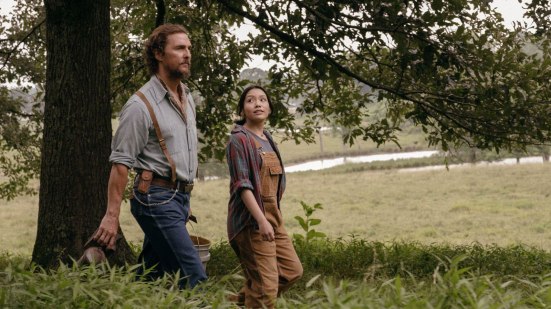
PLOT: Matthew McConaughey is a banjo-playing beekeeper trying to cement his legacy in this boisterous ballad of the US South. Amziah King is the unofficial mayor of his rural Oklahoma community. Southern charm personified, he works as an apiarist but spends his spare time jamming out bluegrass tunes with his ragtag group of buddies and hosting potluck lunches. When his former foster daughter, Kateri, suddenly reappears in his life, Amziah seizes the opportunity to reconnect; but his plans to teach her his trade hit a roadblock when his beekeeping rivals put the family business at risk. The second feature of writer/director Andrew Patterson after the genre-blending The Vast of Night, The Rivals of Amziah King is all at once a revenge fable, a family drama and a heist movie peppered with rollicking musical interludes of songs by T Bone Burnett and The Avett Brothers. Matthew McConaughey (The Beach Bum, MIFF 2019) fits this role like an old cowboy boot, and his stellar supporting cast includes Kurt Russell, Cole Sprouse, Tony Revolori, Owen Teague and Jake Horowitz. But it’s Angelina LookingGlass’s composed performance as Kateri that stands out – she confidently holds her own opposite McConaughey in her debut film role.
ROMERIA
DIRECTOR: Carla Simón
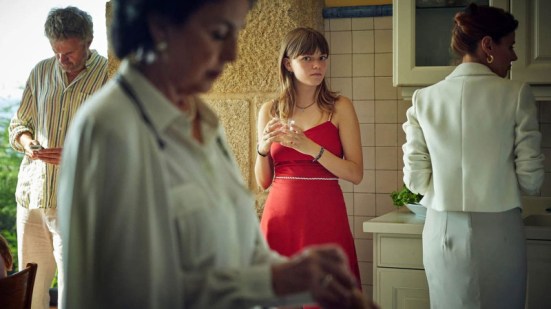
PLOT: Rising auteur Carla Simón’s Cannes Competition stand-out is a poignant coming-of-age tale interrogating hidden family history. In 2004, 18-year-old orphan Marina, armed with a backpack and a camcorder, arrives in the coastal Spanish city of Vigo to meet the affluent family of her father, who died when she was just a small child. She’s there to connect with people she’s never known, to legally establish her father’s paternity so she can apply for a filmmaking scholarship and to learn more about who her dad was. But as she encounters a mix of hospitality and resistance, she begins to understand why so much of his life has been shrouded in secrecy.With her first two features, Summer 1993 and Alcarràs (MIFF 2022), Carla Simón showed herself to be a gifted chronicler of the world of children and the unspoken dynamics of families. Romería builds on these works with another cinematic bildungsroman drawing from her own experiences. Expertly lensed by cinematographer Hélène Louvart (La Chimera, MIFF 2023), the film sets shots of the striking Galician environment against sequences deftly navigating the currents of large family gatherings and bringing back the ghosts of the past. Headlined by an impressive debut performance from Llúcia Garcia as Marina, Romería is a gorgeously subtle and naturalistic tale of becoming.
SIRAT
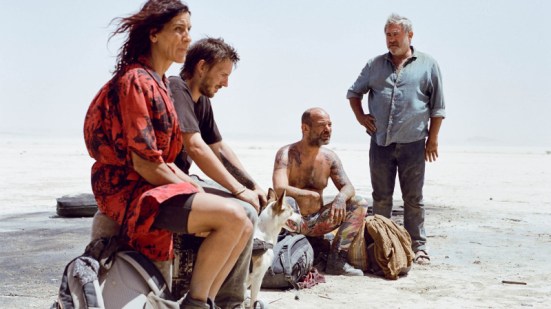
DIRECTOR: Oliver Laxe
PLOT: Fresh from winning bountiful acclaim and the Jury Prize at Cannes, this rave-at-the-end-of-the-world opus is an unforgettable, one-of-a-kind masterpiece. Luis (Sergi López, Pan’s Labyrinth) is travelling through southern Morocco with his son, Esteban. They’re searching for his daughter, who has been missing for five months, last seen at a dance festival in the desert. As the pair travel from party to party, they hear of a semi-mythical rave near the border of Mauritania. Descending into the scorched terrain as a not-so-distant global conflict encroaches, Luis and Esteban are soon drawn into a primal landscape in which they must walk a tightrope between heaven and hell. Produced by Pedro Almodóvar (Pain and Glory, MIFF 2019), Sirât premiered to wild acclaim at Cannes, where it shared the Jury Prize and was voted the best film at the festival in a survey of 50 attending critics. The latest uncompromising vision from Oliver Laxe (Fire Will Come, MIFF 2019), shot on 16mm and featuring a banging Kangding Ray score, plays like some disturbed lovechild of The Wages of Fear, George Miller’s Mad Max: Fury Road and Bernardo Bertolucci’s The Sheltering Sky. Delivered with the elemental power of myth, Sirât offers a vivid example of cinema’s power to shock, unnerve and move.
SOUND OF FALLING
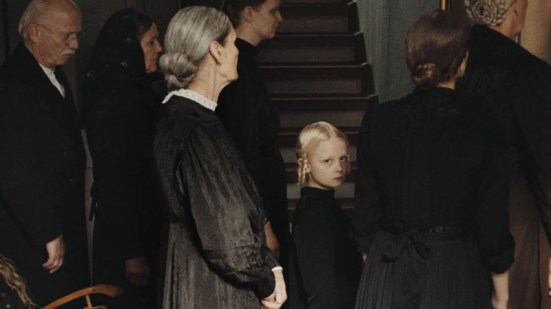
DIRECTOR: Mascha Schilinski
PLOT: Four intergenerational stories anchored by one German farmhouse evoke impressions of girlhood across the 20th century in this Cannes Jury Prize winner. At different points throughout the last century, Alma, Erika, Angelika and Lenka each spend a part of their childhood on the same farm in northern Germany. The farmhouse bears witness to events both global and personal, with two world wars and a divided Germany providing historical backdrops to the girls’ more intimate experiences of growing up – innocent friendships, playful pranks, deep trauma and the burgeoning comprehension of life’s limitations for women under patriarchy. A joint winner of the 2025 Cannes Film Festival Jury Prize, Sound of Falling is a novelistic epic, unfolding in nonlinear fashion and preferencing sense memory over specific, plot-driven events. The four protagonists are connected visually with mirrored gestures, objects and storylines, while Fabian Gamper’s ethereal cinematography hovers through space with ghostlike movements and voyeuristic angles. Earning comparisons to the work of auteurs such as Sofia Coppola, Michael Haneke, Terrence Malick and Jane Campion, writer/director Mascha Schilinski’s second feature is as elegant as it is assured.
THE TOXIC AVENGER
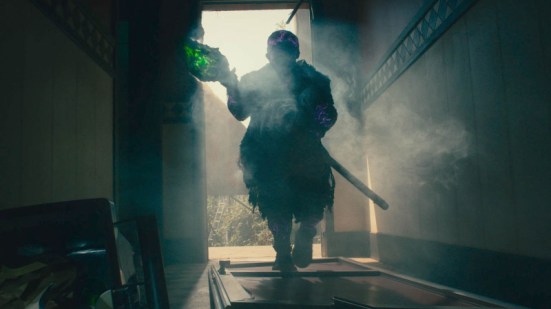
DIRECTOR: Macon Blair
PLOT: At long last, you can watch Peter Dinklage’s mutant eco-vigilante deal out a sludge-barrel of blood and guts in this gleefully gory, formerly buried Troma reboot. Winston Gooze (Peter Dinklage) is a meek janitor at an environmentally devastating chemical factory. His wife has died of cancer, leaving him stepdad to Wade (Jacob Tremblay, Room), and Winston has himself been diagnosed with a fatal brain disease – but his evil boss, Bob Garbinger (Kevin Bacon), won’t even cover his medical treatment on the company’s health insurance. Shortly after meeting whistleblower J.J. Doherty (Taylour Paige, Zola, MIFF 2021), Winston accidentally topples into a vat of toxic waste and emerges profoundly, disgustingly changed. Time for this one-mutant EPA to gruesomely protect his village using superhuman strength and a sludge-dipped, glowing green mop! The original 1984 vigilante B-movie by splatterhouse Troma Entertainment mutated into several sequels, a stage musical, comic books, videogames and a TV cartoon; here, horror multi-hyphenate and Toxie super-fan Macon Blair merges it with his own creative DNA. Repeat Blair collaborators including Dinklage and Elijah Wood (as Bob’s villainous brother, Fritz) relish the more anti-establishment gore splashing around here – so much of it, in fact, that after its triumphant premiere at Fantastic Fest 2023’s opening night, distributors called the film “unreleasable” and shelved it indefinitely. Two years on, as The Toxic Avenger finally staggers back into the world, do you dare to contaminate your eyeballs with a film this outrageously silly?
TWO PROSECUTORS

DIRECTOR: Sergei Loznitsa
PLOT: Adapted from a Soviet Gulag survivor’s story, Sergei Loznitsa’s return to fiction is a Kafkaesque fable that echoes loudly amid contemporary political corruption. In 1937, fresh-faced lawyer Kornyev (Alexander Kuznetsov) receives a letter – written in blood – from a man alleging miscarriage of justice by the state secret police. The sender, Stepniak, has been imprisoned and severely beaten; he is near death’s door. Kornyev is a member of the party faithful, a true believer. He’s horrified by what Stepniak reveals, and decides to investigate, facing administrative hurdles along the way. Later, believing Joseph Stalin will want to know, he vows to take the case to Moscow. Anyone familiar with the history of the Soviet Union’s Great Purge already knows this story doesn’t end well. It’s not unfamiliar territory for Ukrainian director Sergei Loznitsa, either, having previously visited the era with his documentary The Trial (MIFF 2019). Two Prosecutors, his first fiction feature since Donbass (MIFF 2018), is based on a novella by dissident physicist Georgy Demidov, who was imprisoned in the Gulag for 14 years. Kuznetsov brilliantly conveys Kornyev’s perseverance against a system designed to intimidate and deter him from his course, while the film’s beautifully chilling and desaturated visual design underscores its oppressive atmosphere. Picking up the Prix François Chalais at Cannes, this bitingly topical, darkly absurdist legal drama is a terrifying vision of authoritarian abuse and malignant bureaucracy.
URCHIN
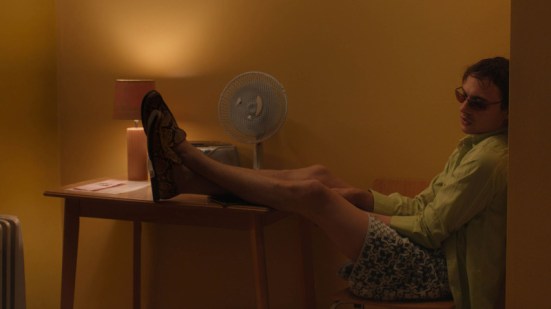
DIRECTOR: Harris Dickinson
PLOT: Winning two awards at Cannes, Harris Dickinson’s directorial feature debut is a remarkable social-realist – and occasionally surrealist – character study recalling the best of Mike Leigh and Ken Loach. Sleeping rough on the streets of London, Mike seems unable to escape the chaos of his impulsivity and substance abuse. He’s intelligent and charismatic, but when his addiction results in an act of unprovoked violence, he’s quickly arrested. Upon release, having used his time in prison to get clean, Mike secures a job, a roof over his head, a tentative romance and a chance to change his life, one self-help tape at a time. But all it takes to spin everything out of control again is the slightest slip into temptation. As an actor, Harris Dickinson has shown a penchant for considered, clever cinema in films such as Triangle of Sadness (MIFF 2022) and Babygirl. He demonstrates that amply in his feature directorial debut, which he also wrote and performs a key onscreen role in; while a revelatory Frank Dillane (Harvest, MIFF 2025), who added to the film’s FIPRESCI Prize at Cannes by landing the Un Certain Regard award for Best Actor, embodies Mike with magnetic force. Deeply rooted in humane authenticity, Urchin reveals a stunning new filmmaking voice.
THE WAVES

DIRECTORS: Sebastián Lelio
PLOT: Sebastián Lelio returns with an audacious Cannes-premiering musical inspired by Chilean student protests in the wake of #MeToo. It’s 2018, and a movement denouncing sexual harassment is gaining traction at universities all over Chile. Julia, a music student in Santiago, is inspired to join the resistance, volunteering for her university’s testimonials committee. As she spends time recording survivors’ stories, Julia fixates on a confusing sexual experience of her own with her vocal coach’s assistant, Max. When her testimony gets swept up in the euphoric wave of the movement, Julia finds herself becoming an unexpected central figure of the protests. Set to an irresistibly catchy score composed by Matthew Herbert – his fifth feature collaboration with director Sebastián Lelio (A Fantastic Woman, MIFF 2017) – and 17 female Chilean musicians, The Wave is a swelling, pulsing, defiant spectacle, dynamically shot by Benjamín Echazarreta and staging dance numbers with hundreds of performers. Zooming out from one woman’s experience to explore the dynamics of political organising more broadly, Lelio’s galvanising rally cry is an unapologetically maximalist treatise on misogynistic violence and the failures of institutions to protect survivors, imbued with surrealistic flourishes and metatextual moments.
WOMAN AND CHILD
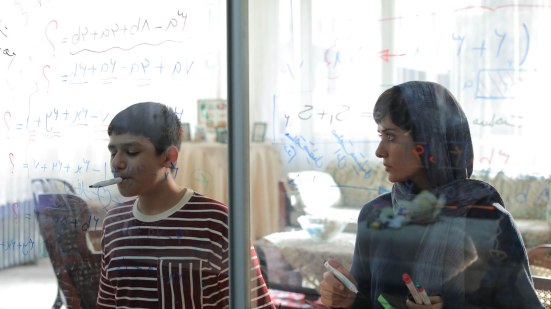
DIRECTOR: Saeed Roustaee
PLOT: Reeling from a tragic event, a widowed mother swears revenge on the men who’ve wronged her. Forty-year-old widow Mahnaz has her hands full. She’s juggling her work as a nurse, raising two children and spending time with her boyfriend Hamid, who has proposed marriage. If that wasn’t enough, her rebellious teenage son Aliyar has just been suspended from school after one prank too many. On the day that Hamid’s parents visit to meet Mahnaz so they can approve of the wedding, tragedy strikes, upending Mahnaz’s precariously balanced life. Her unspeakable grief twists into incandescent rage as she resolves to punish everyone responsible for her pain – by whatever means necessary. Following in the footsteps of his Iranian contemporaries Asghar Farhadi and Jafar Panahi, director Saeed Roustaee – imprisoned for six months for making his previous film, Leila’s Brothers (MIFF 2022) – adds another scathing critique of Iran’s oppressive patriarchal structures to his growing oeuvre of morally knotty social dramas. Premiering at Cannes, his fourth feature sees him reunite with Just 6.5 (MIFF 2020) star Parinaz Izadyar, whose formidable performance as the fury-filled Mahnaz is supported by regular Roustaee collaborator Payman Maadi as the roguish Hamid. Deftly playing with expectations and proceeding with taut, ever-escalating plotting, Woman and Child is an unstoppable force whose wrath seeks only a just resolution.
YOUNG MOTHERS
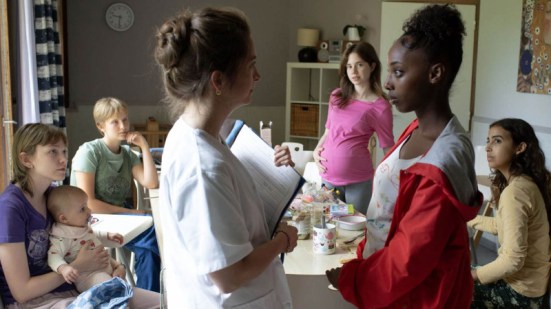
DIRECTOR: Jean-Pierre Dardenne & Luc Dardenne
PLOT: The Dardenne brothers return to MIFF with this deeply human drama about the struggles and aspirations of five girls living in a home for underage mothers. At a state shelter for teenage mothers in the eastern Belgian city of Liège, young women are taught how to care for their newborns, make contact with adoptive parents, deal with depression and survive in an uncaring world. Naïma is excitedly preparing to move on to a new life; Perla wants her child’s father to face his responsibilities; Julie is trying to overcome addiction and become a hairdresser; Jessica wants to reach out to her birth mother; and Ariane will do anything to shield her baby from ever knowing its abusive, manipulative grandmother. Social-realist auteurs Jean-Pierre and Luc Dardenne (Two Days, One Night, MIFF 2014) author another empathetic dramatic portrayal of young people battling to maintain their dignity in the face of an oft-hostile society. Winner of Best Screenplay and the Prize of the Ecumenical Jury at the 2025 Cannes Film Festival – where the pair previously claimed the Palme d’Or twice over, for Rosetta and The Child (MIFF 2005) – this is a profound and humanistic work from two of the most meticulous and consistent filmmakers of this century.
ZODIAC KILLER PROJECT
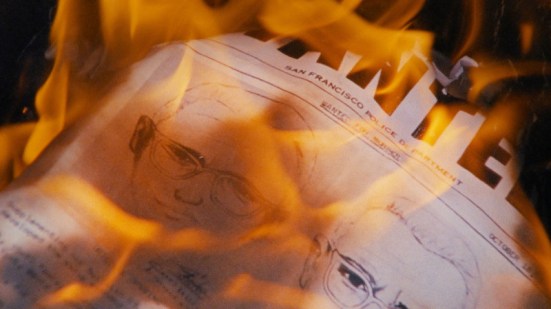
DIRECTOR: Charlie Shackleton
PLOT: One of history’s most notorious unsolved cases forms the basis for a humorously insightful investigation into the true-crime genre. After multimedia artist Charlie Shackleton (The Afterlight, MIFF 2022) fails to get a mooted documentary off the ground – an adaptation of a book that offered theories as to the identity of the Zodiac Killer, the mysterious real-life serial murderer fictionalised in David Fincher’s Zodiac – he instead takes us beat by beat through how he would have made the movie. Interrogating every well-worn cliché of the true-crime genre with a wryly humorous gaze, Shackleton explores the intentions and ethics of content creators and the seeming insatiable bloodlust of audiences. Fresh from screenings at SXSW, CPH:DOX and Sundance Film Festival, where it won the NEXT Innovator Award, this funny and disquieting feature-length video essay offers an unexpected and creative unpacking of genre tropes. Examining everything from landmarks like The Thin Blue Line (MIFF 1989), the Paradise Lost documentary series (MIFF 1996, 2001) and The Jinx through to Netflix’s contemporary commodification of the form, Zodiac Killer Project is a fascinating exploration into why we watch the things we watch.
Well, there you have it. These are the 30 films I’ll be seeing at MIFF 2025. Keep a look for my audio review podcasts for all these films over the course of the festival and also follow me at http://www.twitter.com/BedeJermyn for my daily random thoughts/first reactions to them as well.
Article written by Bede Jermyn
 The Super Network