That’s right, everyone. It’s that time of the year once again. The Melbourne International Festival (or MIFF for short), one of this country’s biggest film festivals, is back for the delight of all Aussie film lovers. Especially me, as it is one of my favourite film related events that I attend every year. After making it’s triumphant return in 2022, this year’s festival looks to be an even bigger year. Over 267 films will be playing at the festival over the course of 18 days in cinemas between August 3rd-20th along with an online program on MIFFPlay from August 18th-27th. Some even making their world premires here. This will be my 8th time covering the festival for this site and I can tell you right now, I’m very excitied. As I’ve said in previous years covering the festival, I’m going to be mostly focusing on films that either don’t have a release date as of yet or they won’t be released until a much later date (whether that will be later this year or sometime in 2024 instead). Honestly, I believe that this year’s line-up looks even more impressive than last’s year. As expected, this year’s batch features many critically acclaimed and award-winning films that have premiered at prestigious films like the Cannes Film Festival, the Sundance Film Festival etc. After going through the program, I’ve narrowed down my list to 40 films that I plan on seeing at MIFF. So which 40 films are they? Well, without further ado. Here’s my complete rundown of everything that I’ll be seeing at MIFF 2023…
20,000 SPIECES OF BEES

DIRECTOR: Estibaliz Urresola Solaguren
PLOT: “How come you know who you are and I don’t?” This is the question at the heart of Basque director Estibaliz Urresola Solaguren’s debut feature. It’s asked by Lucía, who was given the traditionally male name of ‘Aitor’ at birth. Lucía’s mother, who is going through a divorce, fumbles as she comes to terms with her child’s identity, while Lucía’s grandmother is severe not just with her but with her mother’s struggles. With great-aunt Lourdes, the local beekeeper, however, Lucía eventually finds friendship and acceptance. Otero has made history as the youngest actor to be awarded the Berlinale’s prestigious Silver Bear for Best Leading Performance. Beautifully shot on a handheld camera in Basque country, 20,000 Species of Bees is a tender and compassionate film about the trans experience that unfolds with a warm, serene grace. Comparisons are already being made with the similarly delicate work of the Dardenne brothers (Tori and Lokita, MIFF 2022), Carla Simón (Alcarràs, MIFF 2022) and Víctor Erice (The Spirit of the Beehive, MIFF 1974/2022).
ABOUT DRY GRASSES

DIRECTOR: Nuri Bilge Ceylan
PLOT: Turkish auteur Nuri Bilge Ceylan (The Wild Pear Tree, MIFF 2018) presents an ambitious epic of maladjusted male ego. Art teacher Samet thinks he’s too clever for his rural posting. He takes comfort in the rapport he builds with students like Sevim, his current pet, but the lines between favouritism and impropriety grow blurry. When Samet and his colleague Kenan are falsely accused of misconduct, this thorny drama hinges not on their culpability but rather on how the allegations threaten Samet’s self-image as beloved mentor – something inseparable from his problematic desire for adulation. Premiering in competition at Cannes, where Ceylan won the Palme d’Or in 2014 for Winter Sleep, the director’s ninth feature proves him a master of complex characterisation and intricate plotting. Unfolding by turns as a campus drama, a rumination on ethics, a spiky love triangle and a complicated (and complicating) portrait, About Dry Grasses patiently excavates its embittered protagonist’s reaction to the allegations – novelistic conversations with Kenan and fellow colleague Nuray make his feelings explicit, while the camera hints at truths that remain unspoken. Ceylan remains the great chronicler of the Anatolian landscape, capturing the harsh beauty of its summer and winter extremes, which reflect the Janus face of his unforgettable antihero.
THE ADULTS

DIRECTOR: Dustin Guy Defa
PLOT: Siblings can drive us to the edge. This visceral car crash of love and fury revs this American indie vehicle led by Michael Cera (Cryptozoo, MIFF 2021; Barbie). Reuniting with director Dustin Guy Defa (Person to Person, MIFF 2017) for this poignant family dramedy, Cera plays Eric, a perfectly awkward, buttoned-up thirtysomething. Returning to his hometown after a long absence, Eric initially plans a brief trip, but his schedule unspools between awkward reconnections with his sisters – the cranky Rachel (Hannah Gross, Stinking Heaven, MIFF 2015; Mindhunter) and the enthusiastic but rudderless Maggie (Sophia Lillis, I Am Not Okay With This; Asteroid City) – and increasingly competitive poker games with old acquaintances. This slow-burn heartwarmer, which premiered at this year’s Berlinale, boasts three excellent leads who fully commit to the film’s delightful forays into memories of better days. In exchanges both tense and tender, the siblings resort to hilariously vicious cartoon-voiced fights and one particularly unforgettable interpretive-dance breakout set to an Australian 80s pop banger. Recalling The Skeleton Twins (MIFF 2014), Defa’s latest will leave you with proverbial broken bones to mend.
AFIRE

DIRECTOR: Christian Petzold
PLOT: In Christian Petzold’s Silver Bear Grand Jury Prize–winning drama, a summer getaway on Germany’s Baltic coast unravels against the backdrop of looming wildfires. Leon escapes to the coast to work on his second novel, accompanied by his friend Felix, who has grand plans for his art-school portfolio. Expecting solitude, they’re instead met with company in the form of bubbly Nadja (played by Petzold favourite Paula Beer), who leaves the cottage each morning and invites her local lover over in the evenings. As surrounding wildfires threaten to encroach on their languid retreat, so too do the suffocating pressures of creative unrest and social insecurity bear down on Leon’s malaise. Group dynamics shift, attraction builds and, all the while, a sense of foreboding hangs around like a cloud of smoke. Eschewing his penchant for magic realism seen in Transit (MIFF 2018) and Phoenix (MIFF 2015), Petzold returns with the second instalment in a trilogy on nature’s elements that began with Undine (MIFF 2021). Partly inspired by characters from Anton Chekhov’s The House With the Mezzanine and Éric Rohmer’s La Collectionneuse, Afire is a delicate, at times humorous character study and an examination of the modern meaning of work, shrouded in a looming climate catastrophe.
ANATOMY OF A FALL
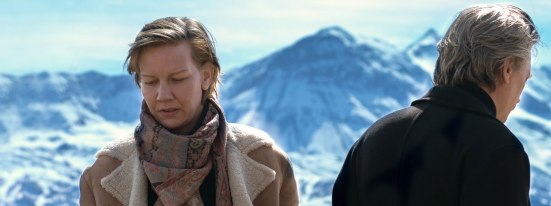
DIRECTOR: Justine Triet
PLOT: Bristling with emotional depth, this Palme d’Or–winning courtroom drama puts the complexities of a relationship on trial. Successful novelist Sandra stands accused of murdering her husband, Samuel, himself an author albeit of lesser esteem. But when her case goes before the courts, what comes under scrutiny are the machinations of a failing marriage – as obscure to outsiders as it is to the couple’s 11-year-old son, who lost his vision in an accident some years prior. Were their fiery spats, which often arose from artistic rivalry, just quotidian contretemps, or were they signs of something more sinister? Co-written by director Justine Triet and her husband, Arthur Harari, Anatomy of a Fall depicts marital acrimony with an uncomfortable veracity rivalling Ingmar Bergman’s Scenes From a Marriage, in a legal procedural investigating the nature of truth. Both Sandra and Samuel drew inspiration from the everyday and, as their work is dredged up as evidence, so too are thorny questions about self-narrativisation, storytelling and how experience is filtered into art. Sandra Hüller (Toni Erdmann, MIFF 2016) is utterly compelling as the defendant – a difficult character who is by turns shrewd, beguiling and ultimately unknowable – proving herself one of the most dynamic and versatile actors of her generation.
ANSELM
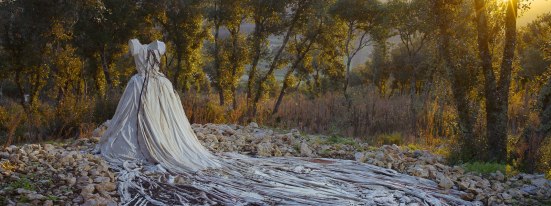
DIRECTOR: Wim Wenders
PLOT: German auteur Wim Wenders’s majestic 3D portrait of compatriot, art-world luminary and friend Anselm Kiefer. Now in his late 70s, Kiefer remains a giant of contemporary art. Working across painting and sculpture, he is renowned for his maximalism, incorporation of unconventional materials and sombre aesthetics – plus his sometimes-controversial engagement with the themes of fascism and the Holocaust. Wenders (Perfect Days, MIFF 2023) takes us into the belly of the beast, situating Kiefer’s solemn creations in the studios where they were conceived and offering insight into the artist’s inspirations, obsessions and outlook. As with its precursor Pina, which captured choreographer Pina Bausch’s dances with awe-inspiring depth, the true star of Wenders’s latest, Cannes-premiering documentary is the art itself. Shot in stunningly rendered 3D 6K, the impasto textures and monumental scale of Kiefer’s ambitious oeuvre appear tangible, shown from sweeping vantages impossible in a gallery setting. The film also provides a glimpse into the director’s creative camaraderie with his subject, both men haunted by the horror of WWII and its ripple effects across German society.
BIRDEATER
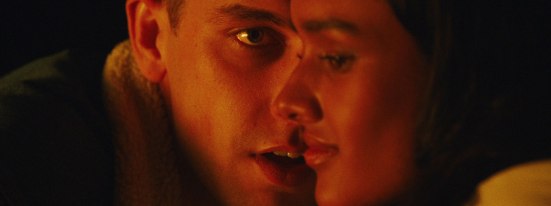
DIRECTOR: Jack Clark & Jim Weir
PLOT: A bachelor party takes a feral turn in this genre-defying debut from an exciting new Australian directing duo. On an isolated country property, a soon-to-be-married young couple – the gregarious Louie and the hesitant Irene – have gathered a group of their closest friends for a pre-wedding celebration. Things start festively enough, but as the night wears on, an uncomfortable revelation about the pair’s relationship upends the festivities. Soon, the party is plunged into full-blown chaos as the night descends into a vicious nightmare. This thrilling debut feature from Australian directors Jack Clark and Jim Weir tackles the evolving debate around gender roles head-on, tangling with the uncomfortable dynamics of relationships – and the menace of unchecked masculinity – through a riveting genre hybrid that fuses anxious domestic drama with the surreal terror of the remote landscape. Electrified by performances from a hungry young ensemble cast, and infused with an unflinching desire to raise tough topical questions, Birdeater is a bold, provocative breakout.
BIRTH/REBIRTH
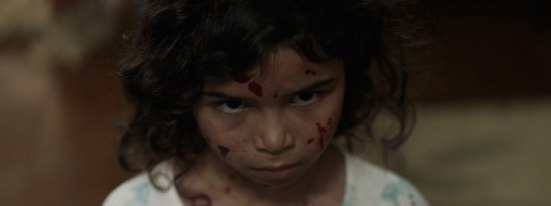
DIRECTOR: Laura Moss
PLOT: In this modern reimagining of Frankenstein, the give-and-take of motherhood is tested through a collision of grief, creation and horror. Clinical in both career and nature, morgue technician Dr Rose Casper is fascinated with the dead, and with bringing them back to life. For years, she’s toyed with reanimation, and is eventually given a chance to continue her experiment following the sudden death of six-year-old Lila – unbeknown to the child’s mother, Celie. Soon, the weight of Celie’s sadness and the prospect of her daughter’s return trigger an unlikely bond between the two women, who venture into questionable morals to keep Lila ‘alive’. Following a series of accomplished shorts – including MIFF 2017 Grand Prix winner Fry Day – Laura Moss found inspiration for their first feature in the 1818 classic by Mary Shelley, who suffered multiple miscarriages. Moss and co-writer Brendan J. O’Brien not only channelled this sense of loss but also, alongside leads Marin Ireland and Judy Reyes, worked with a Stanford pathologist to ensure medical scenes were realistic, while the eerie soundscape of foetal monitors and sonograms come by way of sound designer Doug Moss (the director’s brother). birth/rebirth is an unconventional story of despair and motherhood, and a salve for those who seek solace in the macabre.
COBWEB
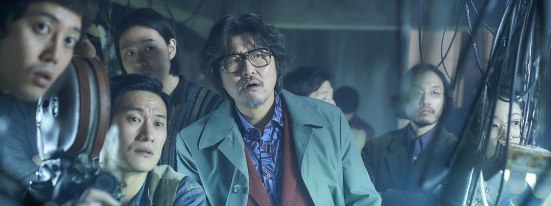
DIRECTOR: Kim Jee-woon
PLOT: In the great tradition of comedic films about filmmaking, the latest from South Korean auteur Kim Jee-woon (A Bittersweet Life, MIFF 2006) stars Song (Broker, MIFF 2022) as an ambitious but beleaguered director desperately trying to finish the movie – a black-and-white melodrama entitled ‘Cobweb’ – that he’s convinced is going to be his masterpiece. The project is rife with chaos: censors are interfering, bewildered actors and producers struggle to make sense of the rewritten ending, and everything else that seemingly can go wrong does. Working together for the fifth time, Kim and Song delight in orchestrating the mayhem of a film shoot run amok, in the process revealing a considerably more playful, impish side of a screen storyteller best known for his dark, twisted thrillers. With its embrace of artifice – from the stage-bound sets to Decision to Leave (MIFF 2022) lenser Kim Ji-yong’s stark photography – and its freewheeling comic tone, Cobweb makes for an entertainingly sharp, stylish and sometimes silly showbiz satire that will be catnip for cinephiles and movie fans alike.
CONANN
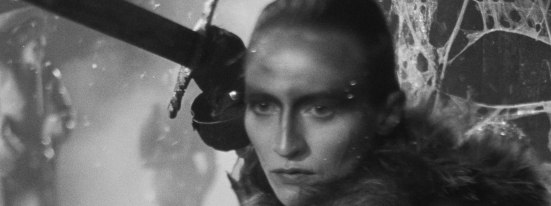
DIRECTOR: Bertrand Mandico
PLOT: From Cannes Directors’ Fortnight comes a deliriously defiant, all-female reimagining of Conan the Barbarian that’s feted to become a new cult classic. Roaming the abyss of time and space, mutant hellhound Rainer (Elina Löwensohn, Amateur; Let the Corpses Tan, MIFF 2018) narrates the epic tale of Conann, a mythical warrior on a demonic journey through six different female incarnations – from stately queen to teenage slave, nether-realm wanderer to Bronx stuntwoman in the 1990s. At each brutally violent stage, she is destined for death at the hands of her older self, only to be reborn in another form and era. Building on his midnight-movie gems The Wild Boys and After Blue, French director Bertrand Mandico delivers an impishly surreal and boundary-pushing riff on Robert E. Howard’s mythical creation that’s a world away from Arnold Schwarzenegger’s oiled-up 80s rendition. And yet it manages to be even more gory, violent and gleefully camp. With cannibalism, kink and plenty of bloodletting, Conann is sure to please cult-movie fans, while its wildly shapeshifting narrative offers a defiantly female – and refreshingly queer – update of the classic barbarian myth.
CREATURE
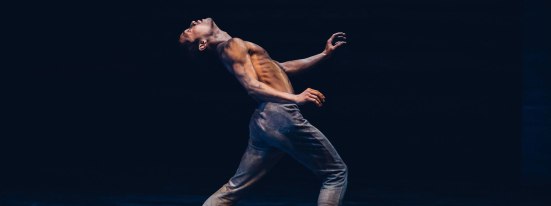
DIRECTOR: Asif Kapadia
PLOT: Oscar-winning Amy and Senna (MIFF 2011) director Asif Kapadia fuses horror and expressionistic dance in this haunting ballet inspired by Woyzeck and Frankenstein. On a remote Arctic research station, a captive creature (played by the English National Ballet’s charismatic principal dancer Jeffrey Cirio) is unwittingly enlisted into a military program that subjects him to sinister experiments. Amid this turmoil, he finds himself enamoured with a cleaner, the only person who shows him kindness; together, these two outsiders dream of escape from their dystopian surrounds. Originally conceived for the stage by award-winning British choreographer Akram Khan and inspired by Georg Büchner’s classic play Woyzeck and Mary Shelley’s Frankenstein, Creature is an expressive, dialogue-free performance of pure movement. Featuring camerawork as kinetic as the captured dancers, swooping and swerving to immerse the viewer in impassioned choreography, the film is also restricted – like predecessors Dogville and Pina – to a single setting, evoking a claustrophobia that acts as metaphor for state control and exploitation. The result is a singular cinematic experience at once spellbinding, tragic and deeply moving.
THE ETERNAL MEMORY

DIRECTOR: Maite Alberdi
PLOT: Former journalist Augusto Góngora has dedicated his life to bringing the repressions and atrocities of Augusto Pinochet’s dictatorship to light. He spent the 1970s and 80s making the harrowing events public, and subsequently fought against political forgetting so that everyday Chileans would know their history. But now, faced with his own faltering memory due to an Alzheimer’s diagnosis, Góngora and his devoted wife, actress and former culture minister Paulina Urrutia, must work together to preserve his identity and recollections for as long as possible. With sensitivity and humour, Oscar-nominated filmmaker Maite Alberdi (The Mole Agent; Tea Time, MIFF 2015) documents the couple adjusting to their new reality while deftly probing the complexities – both personal and societal – rooted in remembrance. Taking home the top prize of Sundance’s World Cinema Documentary section, this poignant filmic collage interweaves archival material, home videos and television recordings, elegantly mirroring the fragmentary flow of reverie.
EUREKA
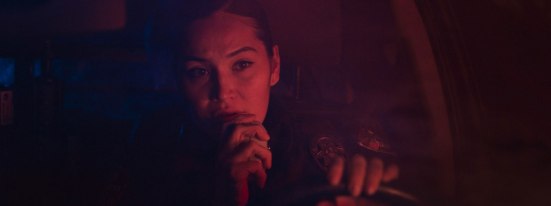
DIRECTOR: Lisandro Alonso
PLOT: Veteran slow-cinema auteur Lisandro Alonso and actor Viggo Mortensen reunite for a free-flowing triptych of interconnected meditations on colonialism past and present. Beginning almost as a parody of Jauja (MIFF 2014), Eureka reintroduces us to Mortensen and Viilbjørk Malling Agger as a father and daughter, this time in a classic black-and-white western – complete with the earlier film’s Academy ratio and rounded-edge framing, except with a lot more gun-slinging revenge. Part two, shot in 1.85 and with Lynchian visual echoes, introduces us to a contemporary Lakota Sioux officer of the law on her rounds. Part three transports us to 1970s Brazil, the shift signalled by another change in aspect ratio (now 1.66) and a virtuoso, almost mythical, metamorphosis. Eureka is Alonso’s most ambitious and experimental work yet, navigating temporal and geographical space in a genre-hopping, enigmatic and at times almost magic-realist contemplation of the legacy of colonisation on First Nations peoples. Working again with Jauja DOP Timo Salminen as well as co-cinematographer Mauro Herce (who shot Óliver Laxe’s Fire Will Come, MIFF 2019; and Mimosas, MIFF 2016), Alonso has created something truly unique, visually arresting and philosophically complex.
FAIRYLAND
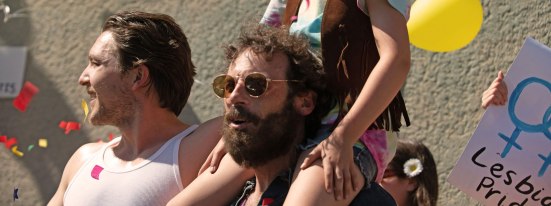
DIRECTORS: Andrew Durham
PLOT: After the sudden death of his wife, Steve and his two-year-old daughter Alysia decamp to the glimmering, gay bohemia of the Haight-Ashbury district in the 70s. What follows is a twin coming of age. Alysia grows up into a rebellious teenager, disgruntled with the world and her preoccupied father. Steve, meanwhile, enmeshes himself in the city’s queer counterculture, gathering boyfriends and writing poetry. When AIDS begins to surface in San Francisco, their ever-shifting relationship is turned on its head. Adapted from Alysia Abbott’s 2013 memoir by first-time Australian writer/director Andrew Durham, Fairyland is a searing portrait of family ties and hard-won freedom. Durham and cinematographer Greta Zozula’s elegant and dreamy lens – the film is partially shot on 16mm – is matched by powerfully understated, vulnerable performances from Scoot McNairy (Monsters, MIFF 2010; True Detective; Halt) and Emilia Jones (CODA, MIFF 2021), who expertly portray the knots of resentment and compassion. Further buoying this poignant film is its exquisite ensemble cast, which includes Geena Davis, Adam Lambert, Maria Bakalova (Bodies Bodies Bodies, MIFF 2022) and Australian actor Cody Fern (American Horror Story).
FREMONT

DIRECTOR: Babak Jalali
PLOT: Twentysomething Afghan refugee Donya once worked as a translator for the US Army in Kabul, but was evacuated to California when the Taliban took over. Now living in the Bay Area city of the film’s title, she works in a fortune-cookie assembly line and dryly jokes with her therapist about her social calendar – which primarily consists of watching soap operas while dining alone in an empty restaurant. Unable to sleep and plagued by survivor’s guilt, Donya is given a chance to write herself a new life following an unexpected promotion at work. With Fremont, Babak Jalali (Radio Dreams, MIFF 2016) has created a wistful character comedy, shot in stunning black-and-white Academy ratio, that is both wryly funny and poignantly melancholic. Real-life Afghan refugee Anaita Wali Zada, in her debut performance, gives Donya an extraordinary emotional depth, and is beautifully assisted by comedian Gregg Turkington (better known to some as Neil Hamburger), Jeremy Allen White (The Bear) and a superb supporting cast who memorably embody the film’s many loveable characters.
GOODBYE JULIA

DIRECTOR: Mohamed Kordofani
PLOT: Just before the secession of South Sudan, married former singer Mona, who hails from the country’s north, seeks redemption for having caused the death of a southern man by hiring his oblivious wife, Julia, as her maid. Over time, the two women forge an unusual and profound relationship across devastating divides. Set in Khartoum between 2005 and 2010 – on the tail end of one of the longest civil wars in history – Goodbye Julia is the first Sudanese film to screen as a Cannes official selection. Engineer turned filmmaker Mohamed Kordofani wrote the story as part of his own journey of coming to terms with, and overcoming, his own biases against Southern Sudanese people. Working with award-winning South African DOP Pierre de Villiers, who elevates every frame with his gorgeous cinematography, and an accomplished cast who imbue their characters with empathy and warmth, Kordofani has crafted an extraordinary debut that tells the story of two women who represent the complicated relationship and differences between northern and southern Sudanese communities while handling the divisions of wealth, creed, gender and geography with adroit insight and experience.
INSIDE THE YELLOW COCOON SHELL

DIRECTOR: Pham Thien An
PLOT: Thien, a detached and morose Saigon thirtysomething, has little idea that his life is about to be pushed towards a vast spiritual reckoning. After learning of his sister-in-law’s death in a motorcycle accident, he is given temporary custody of her five-year-old son; together, uncle and nephew begin the arduous mission of returning the body to her home village for burial while searching for the boy’s father – Thien’s long-lost brother. Expanding on his prize-winning 2019 short Stay Awake, Be Ready, Pham Thien An has delivered a breathtaking, formally accomplished tale of family, loss and grief – a spellbinding journey across the seductive, dreamlike landscape of the countryside and the soul, which won the 2023 Caméra d’Or at Cannes. With its hypnotic rhythm, exquisite visuals and textured sound design, Pham’s three-hour film evokes the work of such heavyweight auteurs as Apichatpong Weerasethakul and Tsai Ming-liang, confirming it as an unmissable masterpiece from one of cinema’s most gifted new talents.
I USED TO BE FUNNY

DIRECTOR: Ally Pankiw
PLOT: Rachel Sennott (Bodies Bodies Bodies, MIFF 2022; Shiva Baby, MIFF 2020) shines in this formally ambitious – and, yes, funny – portrait of a stand-up comedian battling PTSD. Three years ago, Sam was breaking out as a Toronto stand-up comedian while working part-time as an au pair. Now, something deeply traumatic has left her numb and isolated. Rebuffing the kindness of her fellow-comic housemates, she struggles to even shower, let alone write jokes and brave the stage. But when Brooke, the girl Sam once nannied, goes missing at age 14, Sam feels compelled to get involved in the search. Gracefully playing a survivor, Sennott reveals the dramatic flipside of her lauded comedic talent. In this imaginative big-screen debut, TV comedy director Ally Pankiw (The Great; Feel Good; Shrill) immerses the viewer in Sam’s shattered subjectivity, embracing the flashback as both narrative technique and trauma symptom. The character’s memories of her time with Brooke’s rich but dysfunctional family unfurl as fragments, with her intrusive thoughts in nightmarish voiceover. The resulting exploration of pain and recovery is complex, compassionate and, expertly, still leavened with humour.
KIDNAPPED
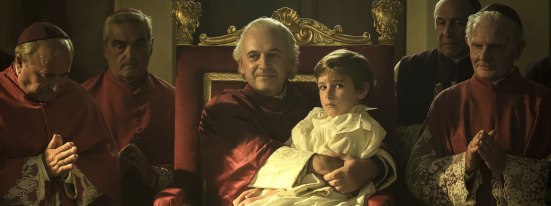
DIRECTOR: Marco Bellocchio
PLOT: In 19th-century Bologna, papal law is sacred. So when Pope Pius IX, racked with poisonous paranoia and insidious antisemitic beliefs, attempts to shore up his crumbling power base by ordering the kidnapping of six-year-old Edgardo, the child’s Jewish family is powerless to resist. The justification? Edgardo’s Catholic nurse had him baptised in secret, making him Catholic and thus a ward of the Church. But the pope’s appalling action eventually sparks a campaign for the boy’s return that will reshape Italy and the world. Bowing in competition at Cannes, this absorbing historical drama from revered writer/director Marco Bellocchio (The Traitor; Blood of My Blood, MIFF 2016) proves that, more than half a century into his career, the octogenarian still has an unwavering eye and a stellar command of operatic flourish. Few filmmakers are as willing to pick over the bones of their country’s darkest hours, but with this story of dogma and the fanatical lengths some will go to maintain influence, he does so with flair – and actor Paolo Pierobon’s impressive turn as the troubled pope only augments this unsparing retelling of history.
LA CHIMERA

DIRECTOR: Alice Rohrwacher
PLOT: A preternaturally skilled archaeologist goes on an Orphean quest for his lost love in Alice Rohrwacher’s latest, and most romantically bewitching, film. Just out of jail and still searching for his late beloved Beniamina, crumpled English archaeologist Arthur reconnects with his wayward crew of tombaroli accomplices – a happy-go-lucky collective of itinerant grave-robbers who survive by looting Etruscan tombs and fencing the ancient treasures they dig up. Arthur isn’t interested in the artefacts, though; he’s seeking a legendary door to the underworld, and to Beniamina. Following on from Happy as Lazzaro (MIFF 2018) and The Wonders, La Chimera completes Rohrwacher’s unofficial trilogy, set in and around the stunning Tuscan landscapes of her birth, that trades in blurring dualities: past and present, rural and urban, life and death, fantasy and reality. The director goes all in here, playing with film gauges (35mm, super-16 and 16mm) and aspect ratios as well as style and texture to communicate differing states of reality and mind. Her vision is once again enacted by the exquisite cinematography of Hélène Louvart, while her wonderful cast includes Isabella Rossellini, sister Alba Rohrwacher and a transcendent Josh O’Connor (now famed for playing Charles in The Crown, but last seen at MIFF in 2017 film God’s Own Country). Enchanting, funny, lush and poetic, La Chimera is a modern myth in the making.
LAST SUMMER

DIRECTOR: Catherine Breillat
PLOT: After a decade-long hiatus, Catherine Breillat (Abuse of Weakness, MIFF 2014; Bluebeard, MIFF 2009) returns with a daring portrait of a woman’s intimate relationship with her teen stepson, starring Léa Drucker. A well-to-do family lawyer working with cases involving child protection, Anne finds her morals tested with the arrival of her husband Pierre’s adolescent ‘problem child’, Théo. Kicked out of school for assaulting a teacher, Théo spends his days indulging in the type of hedonistic behaviour that epitomises pure teenage rebellion, chain-smoking and defying his father. Meanwhile, Anne discovers that his presence stirs a desire that oversteps legal and familial boundaries. Renowned for her uncompromising explorations of female sexuality, Breillat crafts a story about the confluence of temptation and the abuse of power by loosely remaking May el-Toukhy’s Danish drama Queen of Hearts (MIFF 2019). Lingering camerawork and close-ups allow the stellar performances from Drucker (Incredible but True, MIFF 2022; Two of Us, MIFF 2020) and newcomer Samuel Kircher to be coloured in with nuance and tension. Unafraid to be subversive, Breillat’s Cannes-competing drama marks her triumphant – and characteristically bold – comeback.
LATE NIGHT WITH THE DEVIL
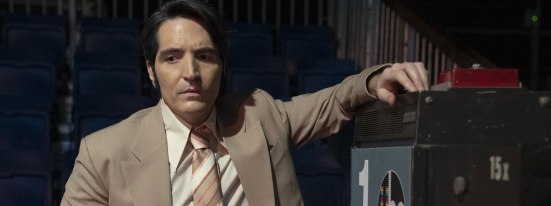
DIRECTOR: Cameron Cairnes & Colin Cairnes
PLOT: The Aussie brothers behind 100 Bloody Acres (MIFF Premiere Fund 2012) mix frights and frivolity in recreating a 1970s talk show that goes straight to hell. Jack Delroy is a syndicated late-night talk show host craving to be the next Johnny Carson. On the one-year anniversary of his wife’s death (on Halloween night, of course), he returns to the airwaves with guests including a clairvoyant, a parapsychologist and the lone survivor of a satanic cult. Unbeknown to Jack, the trio is joined by a supernatural force seeking to haunt him until a climax so diabolical it would no doubt top the primetime charts. Colin and Cameron Cairnes dove into footage of veterans like Carson, David Letterman, Don Lane and Dick Cavett to ensure Late Night With the Devil captures the flavour of the era’s iconic late-night broadcasts. Presented as a lost recording of a fateful episode, this deviously fun twist on the genre features a standout leading turn from David Dastmalchian (The Dark Knight; Dune) and a cast that includes Fayssal Bazzi (Measure for Measure, MIFF Premiere Fund 2019) and Laura Gordon (Undertow, MIFF Premiere Fund 2019). The King of Horror himself, Stephen King, applauded the film following its SXSW premiere: “It’s absolutely brilliant,” he tweeted to his 7.1 million followers. “I couldn’t take my eyes off it.”
MAY DECEMBER

DIRECTOR: Todd Haynes
PLOT: Julianne Moore and Natalie Portman team up in Todd Haynes’s perfectly camp melodrama that dredges up a sexual scandal, which screened in competition at Cannes. At 36, Gracie (Moore) caused a worldwide furore and landed herself behind bars after her predatory sexual relationship with a 13-year-old boy was made public. Some 20 years later, with Gracie now married to him with children of their own, the complexities resurface when actor Elizabeth (Portman) arrives in their hometown of Savannah, Georgia, ahead of playing her in an upcoming biopic. But Elizabeth’s stripping of her subject’s layers triggers a crossing of boundaries – from every which way. With unsurprising depth, Portman and Moore – the latter starring in her fourth Haynes film after Safe (MIFF 1996), Far From Heaven and I’m Not There – deliver captivating performances, while Riverdale’s Charles Melton deserves commendation as the baby-faced husband Joe. As an intertextual touch, the theatrical score by Marcelo Zarvos is adapted from the piano-led one used in Joseph Losey’s 1971 illicit-romance flick The Go-Between; at times deliberately incongruous with surrounding events, it adds a dose of humour to an otherwise unnerving undercurrent.
MERCY ROAD

DIRECTOR: John Curran
PLOT: The first virtually produced Australian feature, Mercy Road is an unrelentingly tense psychological thriller from Tracks director John Curran. Pushed to the limit and on the edge of sanity, single father Tom learns just how far he must go to protect what matters most to him. His daughter Ruby has been abducted, and to save her, he must carry out a series of tasks as instructed by a disembodied, psychopathic voice on the other side of a phone call. Battling against near-impossible odds, Tom realises that the true ransom demanded of him is a piece of his own soul. Curran teamed up with Alex Proyas’s (Dark City: Director’s Cut, MIFF 2017) production company Heretic Foundation to bring Mercy Road to life using a real-time in-camera compositing technique involving LED screens and Unreal Engine. Matching Curran’s ingenious direction is an arresting star turn from Hollywood star-on-the-rise Luke Bracey (Point Break; Hacksaw Ridge), who is ably supported by fellow cast members Toby Jones (Berberian Sound Studio, MIFF 2012) and Susie Porter (Cargo; Ladies in Black). The result is a groundbreaking and visually spectacular depiction of one man’s desperate search for redemption.
MONOLITH

DIRECTOR: Matt Vesely
PLOT: Cast out and eager to salvage her reputation, an unnamed journalist retreats to her parents’ house to work on a podcast about the paranormal and the unexplained. While researching, she learns about a retiree’s encounter with a puzzling black brick, which appeared seemingly out of nowhere. A raft of similar anecdotes involving other black bricks then leads her down shadowy paths and to a desperate fixation on the truth behind the mysterious objects – until, one day, a sinister brick of her own appears. Blending science fiction and thriller in his gripping feature debut, Matt Vesely (My Best Friend Is Stuck on the Ceiling, MIFF 2016) astutely crafts dramatic tension through constraint. Literalising the notion of confinement – evident here not just in the single setting but also in the fanatics’ blinkered mindsets – the camera barely leaves the only onscreen character, played with expressive intensity by Lily Sullivan (Evil Dead Rise; Jungle, MIFF Premiere Fund 2017) in what is effectively a one-hander. Ramped up with Benjamin Speed’s unsettling score, Monolith drip-feeds in ominous fashion before delivering its disturbing conclusion.
MONSTER
DIRECTORS: Hirokazu Kore-eda
PLOT: Hirokazu Kore-eda’s tender answer to the question ‘Who’s the monster?’, awarded Best Screenplay and the Queer Palm at Cannes, will melt your heart. Rural tween Minato has been acting strangely since his dad’s death: drastically cutting his hair, leaping from a moving car, claiming his brain has been replaced with a pig’s. When he comes home from school injured, his mum Saori is convinced something more sinister is at play and sets out on a relentless campaign to expose Minato’s teacher, Hori, as the culprit victimising her son. In turn, Hori claims Minato is a bully. But Minato has his own perspective, focused on his new friend, with troubles of his own. Hirokazu Kore-eda (Broker, MIFF 2022; Shoplifters, MIFF 2018) has maintained a fascinating, prolific career of exploring universal human impulses through the lens of fractured and makeshift families. His lauded latest film may recall both the interpretive re-visions of Akira Kurosawa’s Rashomon and the touching central bond at the heart of Lukas Dhont’s Close (MIFF 2022), but setting it apart is its startlingly wondrous warmth. Adding to Monster’s atmosphere of well-meant misapprehension is a delicate piano score by Ryuichi Sakamoto – the subject of Stephen Nomura Schible’s eponymous MIFF 2018 documentary – in his final screen work before his death this March.
NO BEARS

DIRECTOR: Jafar Panahi
PLOT: In this gripping blend of fact and fiction, revered Iranian auteur Jafar Panahi (3 Faces, MIFF 2018; Closed Curtain, MIFF 2013; Offside, MIFF 2006) decides whether to cross a line for his beliefs. Panahi has ostensibly been making a docudrama about a Turkish couple who are procuring fake passports to cross the border into Europe. He directs them remotely beyond the Iranian border he himself cannot cross – he still faces house arrest for his filmmaking – but, coaxed on by his assistant director, ponders whether to transgress his home country’s limits. Meanwhile, the previously fawning villagers who have hosted him are growing suspicious. And are there really bears out there in the dark? Moments of profound and painful symbolism abound in this trademark playful yet soul-achingly metatextual drama, which was awarded a Special Jury Prize at Venice. Shooting across this demarcation line, Panahi – here seen as his own avatar – raises questions about the flimsiness of nation-states’ frontiers, the corruptive effect of parochialism and the repressive power of dogma. But, ultimately, this startlingly self-aware work reminds us of Panahi’s bravery every time he treads the tightrope of sedition through storytelling.
PASSAGES
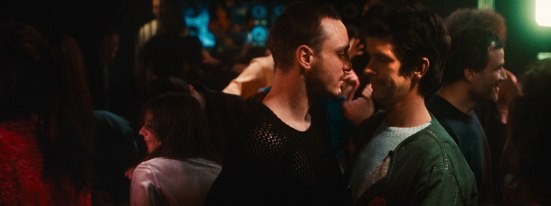
DIRECTOR: Ira Sachs
PLOT: Love Is Strange (MIFF 2014) director Ira Sachs embraces the art of French cinema in this queer, Paris-set musing on a complicated relationship. Fast-rising star Franz Rogowski – who also appears in this year’s Bright Horizons contender Disco Boy – plays Tomas, an impetuous Fassbinder-like director who has fallen into a funk with his husband (charmingly played by Ben Whishaw, also in MIFF 2023’s Bad Behaviour). When magnetic schoolteacher Agathe (Blue Is the Warmest Colour’s Adèle Exarchopoulos) lands on the scene and catches Tomas’s roving eye on the dance floor, things soon get emotionally messy. Sachs (Frankie, MIFF 2019; Little Men, MIFF 2016) and regular co-writer Mauricio Zacharias lean into the French New Wave’s steamiest tropes in this tempestuous love triangle that brews within the Parisian indie film scene. Debuting at Sundance, this mature, mordantly funny look at sexual fluidity and wavering commitment was nominated for both the Teddy Award and the Panorama Audience Award at the Berlinale. And with handsome cinematography by Saint Laurent lenser Josée Deshaies, Passages will no doubt be an intriguing affair to remember.
PERFECT DAYS
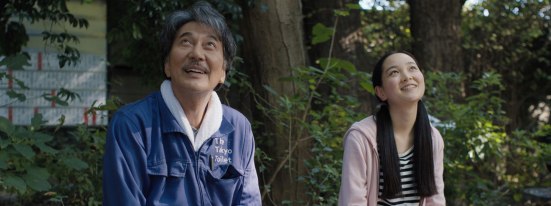
DIRECTOR: Wim Wenders
PLOT: In this triumphant return to narrative film, Wim Wenders tackles life’s little details – mess and all – with his trademark meditative movement. Hirayama wakes at dawn, tends to his plants, dons his blue jumpsuit, then spends his days transforming the Sisyphean labour of cleaning Tokyo’s public toilets into a meticulous, even poetic practice of appreciating life’s small pleasures. In his van, he listens to mid-century American classic songs; on his lunch break, he photographs patterns of light through trees; in the evenings, he inhales great novels. And then he dreams … While Hirayama keeps himself carefully aloof from interpersonal entanglements, he nonetheless folds everyday acts of care and empathy into his routine. Hailed as the godfather of slow cinema, Wenders (whose film Anselm also screens at this year’s MIFF) has spent recent years making documentaries; Pope Francis: A Man of His Word (MIFF 2018) has even been hailed as his career’s crowning achievement. Yet as a sublime, deceptively simple portrait of existence and joy, Perfect Days is perhaps the most perfect distillation of the 77-year-old filmmaker’s signature style and themes – even winning the Best Actor award at this year’s Cannes for Koji Yakusho. Whereas Wenders’s other protagonists strove to outrun their restless yearning and nostalgia, Hirayama finds a tantalisingly enigmatic inner peace.
RADICAL

DIRECTOR: Christopher Zalla
PLOT: CODA (MIFF 2021) scene-stealer Eugenio Derbez leads this luminous Sundance Festival Favorite Award winner about an inspiring teacher. After charming audiences as the big-hearted choir leader in eventual Oscar Best Picture winner CODA, Derbez returns to the big screen to play another life-changing educator. This time, the beloved Mexican superstar plays Sergio, an irrepressible man determined to usher the adorable kids in his classroom into better lives beyond the poverty and cartel-driven violence racking their city, Matamoros, on the US border. Helmed by Kenyan-born filmmaker Christopher Zalla, who wowed MIFF audiences in 2008 with his dog-eat-dog thriller Padre Nuestro, this feel-good film based on Sergio Juarez Correa’s real-world story follows in the footsteps of classics of the genre, including To Sir With Love, Dead Poets Society and Dangerous Minds. But Zalla’s sincere direction and Derbez’s impeccable performance create an unforgettable tale all its own. A tearjerker that does not deny the difficult realities at play, Radical brims with faith in the new generation – and in the adults who must fight for their futures.
RIDDLE OF FIRE

DIRECTOR: Weston Razooli
PLOT: Hazel, his brother Jodie and their friend Alice, who call themselves “The Three Reptiles”, want to spend the day gaming. But first, Hazel and Jodie’s mother insists they must fetch her a blueberry pie. What seems like a simple errand becomes a monumental quest across the North American West, setting off a wild tale with as many obstacles as the videogame the trio actually wanted to play. Soon, the Reptiles must face off against the Enchanted Blade Gang led by witch Anna-Freya Hollyhock before they can find their way home. Ostensibly a paean to childhood imagination, Weston Razooli’s comic odyssey is a coolly nostalgic, irreverent riff on beloved coming-of-age and magic tropes. Shot in hyper-saturated 16mm, the film has an impressive otherworldly quality that harks back to the golden age of kids’ adventure films – The Goonies, Stand by Me and E.T. the Extra-Terrestrial – impressively combining its dry wit with charming sincerity. Strange and playful, Riddle of Fire is sure to evoke Hayao Miyazaki, Akira Kurosawa, François Truffaut and even recent festival favourite Cryptozoo (MIFF 2021).
ROBOT DREAMS

DIRECTOR: Pablo Berger
PLOT: In an animated alternate-reality 1980s New York City, lonely but enterprising Dog decides to build himself a companion via mail order. In no time, Dog and his new pal Robot become inseparable, strolling around Manhattan and rollerblading in Central Park to the tune of Earth, Wind & Fire. But one day, an unforeseen incident sees Robot rusted and abandoned in the sand. Will the pair find their way back to each other? Spanish filmmaker Pablo Berger captivated MIFF audiences in 2013 with his imaginative film Blancanieves, a live-action, feminist revamp of Snow White set within a bullfighting ring. This visionary vein returns in his Cannes-premiering debut animation, lovingly adapted from Sara Varon’s award-winning graphic novel, in which he uses a meticulous 2D style to capture the buzz and colour of the Big Apple and its many animal inhabitants. But this vivid sensorial work is no Zootopia; with charmingly deadpan comedy, no dialogue and a forthright acceptance of how life can change in a second, Robot Dreams offers a heartfelt musing on friendship, loss and the timelessness of love.
THE ROOSTER

DIRECTOR: Mark Leonard Winter
PLOT: Hugo Weaving and Phoenix Raei play a hermit and a cop who form an unlikely connection amid crisis in this wonderfully weird sucker-punch of tenderness. Dan (Raei, Below, MIFF Premiere Fund 2019; Clickbait) works in a remote police outpost in regional Victoria, but when a childhood friend is discovered dead following an incident at the local high school, his judgement and credentials are thrown into question. Consumed with guilt and suspended from the force, Dan decides to camp out in the forest, where he encounters a cranky jazz-listening, shotgun-toting, ping-pong-obsessed misanthrope (Weaving, Lone Wolf, MIFF Premiere Fund 2021; Measure for Measure, MIFF Premiere Fund 2019). At first transactional, this bond soon becomes transformative for the broken men. But, surrounded by trees, far away from any trace of civilisation, is everything really as it seems? Supported by the MIFF Premiere Fund, the feature debut from actor turned writer/director Mark Leonard Winter (The Dressmaker; Little Tornadoes, MIFF Premiere Fund 2021) is a delicate, at times droll, dramatisation of masculinity, mental health and the solace found in companionship. Winter’s storytelling talents are on display in a film that is unafraid to make bold choices: the enigmatic commingles with the everyday, painterly compositions depict both rural isolation and the natural sublime, and the eerie sound design maintains an air of intriguing unease. With Weaving and Raei welded by a tremendous chemistry, The Rooster unfurls as a distinctive, unforgettable tale of two individuals confronting life’s challenges and discovering what hides behind the bravado.
SCRAPPER
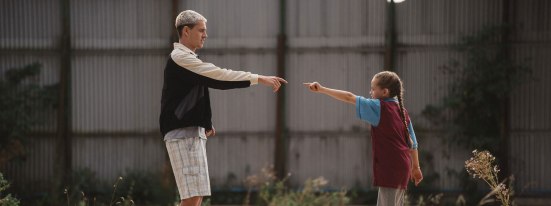
DIRECTOR: Charlotte Regan
PLOT: Twelve-year-old Georgie lives alone in an East London council flat. Following the death of her mother, she has avoided eviction by stealing and reselling bikes, and by convincing the authorities she’s being cared for by an uncle called “Winston Churchill”. But things get complicated when her dad, Jason (Harris Dickinson, Triangle of Sadness, MIFF 2022; Beach Rats, MIFF 2017), reappears after over a decade away. Behaving with the immaturity of someone closer to her age, Jason is out of his depth and unwelcome until he and Georgie realise how alike they are. Charlotte Regan’s energetic and inventive debut feature depicts coming of age with stinging frankness, but tempers it with whimsy, wit and even forays into magic realism – a style that’s been described as a blend of Ken Loach and Wes Anderson. Vibrantly played by newcomer Lola Campbell, who has an effortless chemistry with Dickinson, Georgie faces a world that should be bathed in grey, but Regan and DOP Molly Manning Walker (whose own film How to Have Sex screens in competition at MIFF 2023) masterfully enliven it with a luminous tenderness.
SHORTCOMINGS
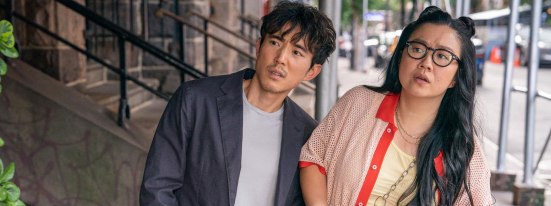
DIRECTOR: Randall Park
PLOT: First-time director Randall Park (Fresh off the Boat; Always Be My Maybe) takes on social mores with this fresh and fun misanthropic comedy. Ben, a struggling Japanese American filmmaker, is frustrated that a movie like Crazy Rich Asians has ‘solved’ Hollywood’s representation problems. He’s also a crank whose superiority of personal taste doesn’t endear him to his friends. After he and girlfriend Miko break up, Ben flounders: the cinema he manages fails, his screenplays go unwritten and his new bisexual boo delivers harsh truths about race, sex and growing up. What’s a grump to do when he should be old enough to know how the world works? Adapted by Adrian Tomine from his own 2007 graphic novel, Park’s assured directorial debut has a modern queer energy and a laser-focused skewering of the art and festival worlds that will make audiences squirm with relatability when they’re not guffawing. Starring Justin H. Min (After Yang; The Umbrella Academy), comedian Sherry Cola, Disney star Debby Ryan and Everything Everywhere All at Once’s Stephanie Hsu in a hilarious cameo, Shortcomings finds humour and heart in the bad choices and missed turns of flawed people flailing through adulthood.
SLEEP

DIRECTOR: Jason Yu
PLOT: Bong Joon-ho protégé Jason Yu’s clever horror debut stars South Korean favourites Lee Sun-kyun (Parasite) and Jung Yu-mi (Train to Busan, MIFF 2016). Newlyweds Hyun-su (Lee) and Soo-jin (Jung) are expecting a baby, but this may not be the only new addition to their home. One night, Hyun-su sits bolt upright in bed, declaring, “Someone’s inside,” before falling back asleep. Are his somnambulant speeches just night terrors, like the doctors suggest? Or has a more sinister presence invaded their home, as the increasingly anxious Soo-jin fears? Palme d’Or-winning director Bong has called Sleep, which premiered in competition at Cannes Critics’ Week, “the most unique horror film and the smartest debut film [he has] seen in 10 years”. Unfolding primarily within the couple’s apartment, Yu deftly conjures an all-consuming atmosphere of domestic claustrophobia, offsetting creeping dread with dark humour. Supernatural scares are grounded by authentic performances from leads Lee and Jung – who also starred together in Hong Sang-soo’s Our Sunhi (MIFF 2014) and Oki’s Movie (MIFF 2011) – in an unsettling marriage story that asks if we can ever truly know the people we love. This assured first feature confirms Yu as a filmmaker to watch.
THE SWEET EAST
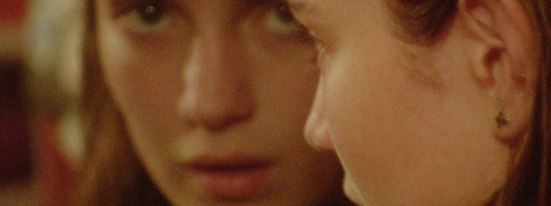
DIRECTOR: Sean Price Williams
PLOT: Famed indie cinematographer Sean Price Williams makes his feature directorial debut with this freewheeling picaresque trip through the cliques and communes of today’s USA. Listless and easily repulsed Lillian is on a school trip to Washington, DC. Separated from her classmates, she finds herself on a feverish journey through the eastern seaboard, falling into the orbit (or trap) of various freaks and interlopers who call this great nation home: predatory professors, vampiric filmmakers, white supremacists and rich kids cosplaying as anarchists. The teen is open to play-acting at each leg, and what results is a darkly satirical road movie that takes the temperature of modern America with gleeful irreverence. Williams’s glorious, grainy lensing – previously seen in films such as the Safdie brothers’ Good Time (MIFF 2017), MIFF 2022 favourite Funny Pages, Golden Exits (MIFF 2017) and more – is on full display here, depicting Lillian’s encounters with tactile dreaminess. Complementing this visual appeal is a superb cast, with lead Talia Ryder (Never Rarely Sometimes Always) joined by Simon Rex (Red Rocket), Ayo Edebiri (Theater Camp, MIFF 2023; The Bear), playwright Jeremy O Harris and Australia’s own Jacob Elordi (Euphoria). Screening straight from Cannes Directors’ Fortnight and penned by film critic Nick Pinkerton, The Sweet East is chatty, compulsive, always unpredictable and hilarious in its mayhem.
THIS IS GOING TO BE BIG

DIRECTOR: Thomas Charles Hyland
PLOT: Peek behind the curtain as a cast of neurodivergent teens prepares to come of age and hit the stage in their school’s time-travelling, John Farnham–themed musical. Every two years, the Sunbury and Macedon Ranges Specialist School’s Bullengarook campus puts on a play. For expressive overachiever Halle, it will be an opportunity to honour her late aunt, who loved to sing. For methodical Josh, it will be a challenge to take seriously, while wide-eyed Elyse is just happy to be involved. And for charismatic Chelsea, it will be a chance to wow an audience with her undeniable comedic skill. Six months of auditions, rehearsals and nerves will be gruelling, but everything will pay off on The Time-Travelling Trio’s opening night. The first MIFF Premiere Fund film to be awarded Bus Stop Films’ ‘Inclusively Made’ certification, in recognition of authentic representation and inclusive filmmaking processes, Thomas Charles Hyland’s feature directorial debut brims with unfettered honesty and quirky humour, revealing the human story behind the performed one. Told squarely from the teenagers’ perspective and documenting their experiences of autism, clinical anxiety and acquired brain injury, the film follows them, their families and the school staff as they weather the highs and lows leading up to showtime, foregrounding creativity’s role in fostering self-acceptance and in nurturing agency and resilience. As its title suggests, This Is Going to Be Big is sure to be a hit – an endearing, relatable tale of adolescent aspiration and a community that comes together to ensure these young voices ring out, both as John Farnham through the ages and, most importantly, as their optimistic selves.
TIGER STRIPES

DIRECTOR: Amanda Nell Eu
PLOT: Boisterous 12-year-old Zaffan isn’t afraid to do as her conservative religion and strict education say she shouldn’t, like removing her headscarf for TikTok dances and showing off her bra to friends. She’s also the first at school to embark on the treacherous journey of puberty, which quickly causes her status as ringleader to be replaced with being a target for mockery and ostracism. Then mysterious scars appear and Zaffan’s changing body becomes animalistic … If you rile this beast, she’ll show her claws. Writer/director Amanda Nell Eu’s fascination with body horror, the South-East Asian folk tale of the were-tiger and her own experience of feeling “like a monster” during puberty motivated her low-budget, high-impact feature debut. Eu’s original, darkly funny creation has already made its mark, becoming the first film from a Malaysian female director to be selected for Cannes and the first Malay-language film to scoop the Grand Prize at Cannes Critics’ Week.
YOU’LL NEVER FIND ME
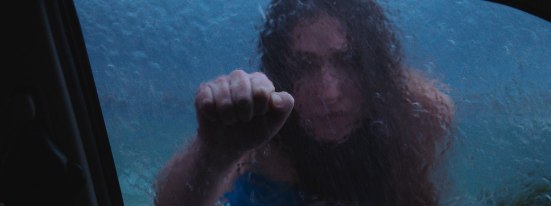
DIRECTOR: Josiah Allen & Indianna Bell
PLOT: On a dark and gloomy night, a violent thunderstorm is about to send two people into a tailspin of intrigue and paranoia. Soaked, shaken and seeking shelter from the rain, an enigmatic young woman, known only as “the visitor”, arrives at the doorstep of Patrick, an eccentric old man living in a mobile home at the rear of an isolated caravan park. But what begins as an apparent safe haven for these two lonely souls gradually curdles into a nightmare of suspicion, as distrust escalates into danger, reality crumbles and an unforgettably twisted showdown awaits. Shot on a micro-budget by emerging South Australian filmmakers Josiah Allen and Indianna Bell, this ingenious genre piece – the only Australian selection at this year’s Tribeca Film Festival – makes thrilling use of its minimalist, unnerving premise and showcases combustible lead performances from Brendan Rock (Snowtown; Jack Irish: Black Tide) and newcomer Jordan Cowan as it slowly ratchets up the tension. With a spooky atmosphere and building to a climax as bizarre as it is shocking, You’ll Never Find Me is a hypnotic horror fable you won’t be able to shake.
Well, there you have it. These are the 40 films I’ll be seeing at MIFF 2023. Keep a look for my audio review podcasts for all these films over the course of the festival and also follow me at www.twitter.com/BedeJermyn for my daily random thoughts/first reactions to them as well.
Article written by Bede Jermyn
 The Super Network